GUIDES · BUDGET
Upgrades under €50: which ones save you time.
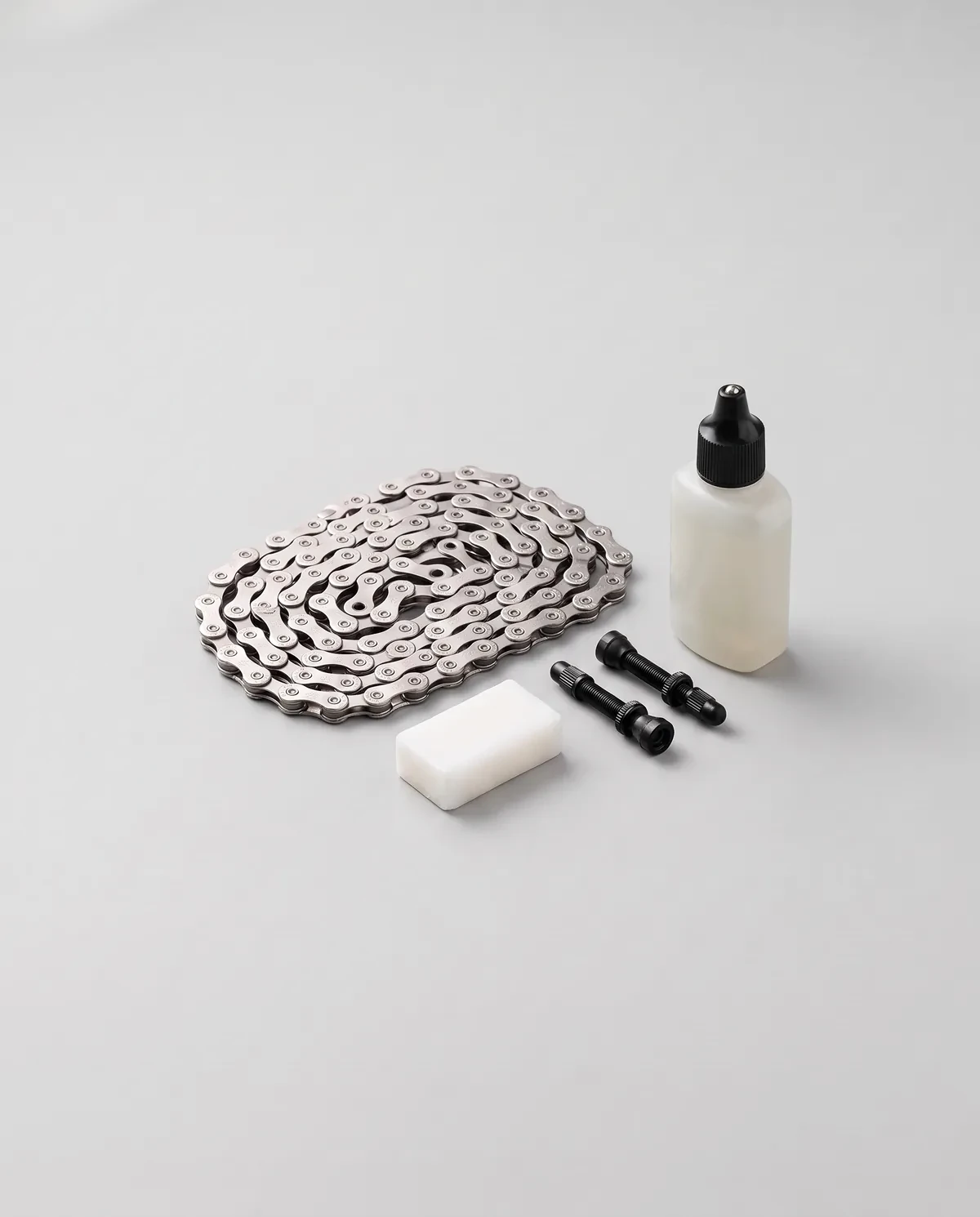
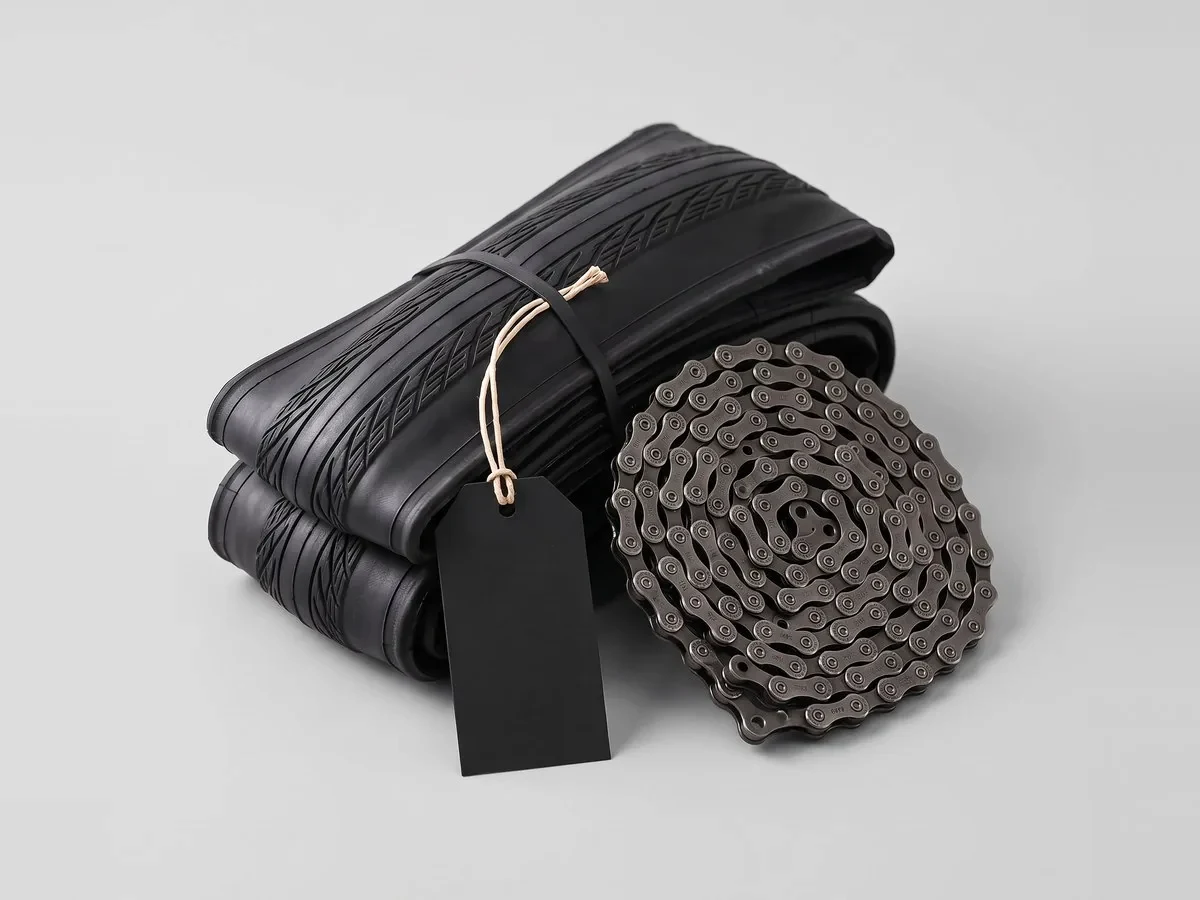
€50 won’t get you aero wheels or an aero helmet. It will get you tubeless and a waxed chain, two of the upgrades that give you the most per euro on the example ride. Everything else under €50 is only worth a few seconds, and two things don’t cost anything.
−3'30"
What tubeless and a waxed chain are worth together on the example gravel ride, 62 km (39 mi) with 780 m (2,560 ft) of climbing, for €95 total.
−2'20"
Tubeless on its own, for €45. On gravel it’s the top step on the ladder.
−3'20"
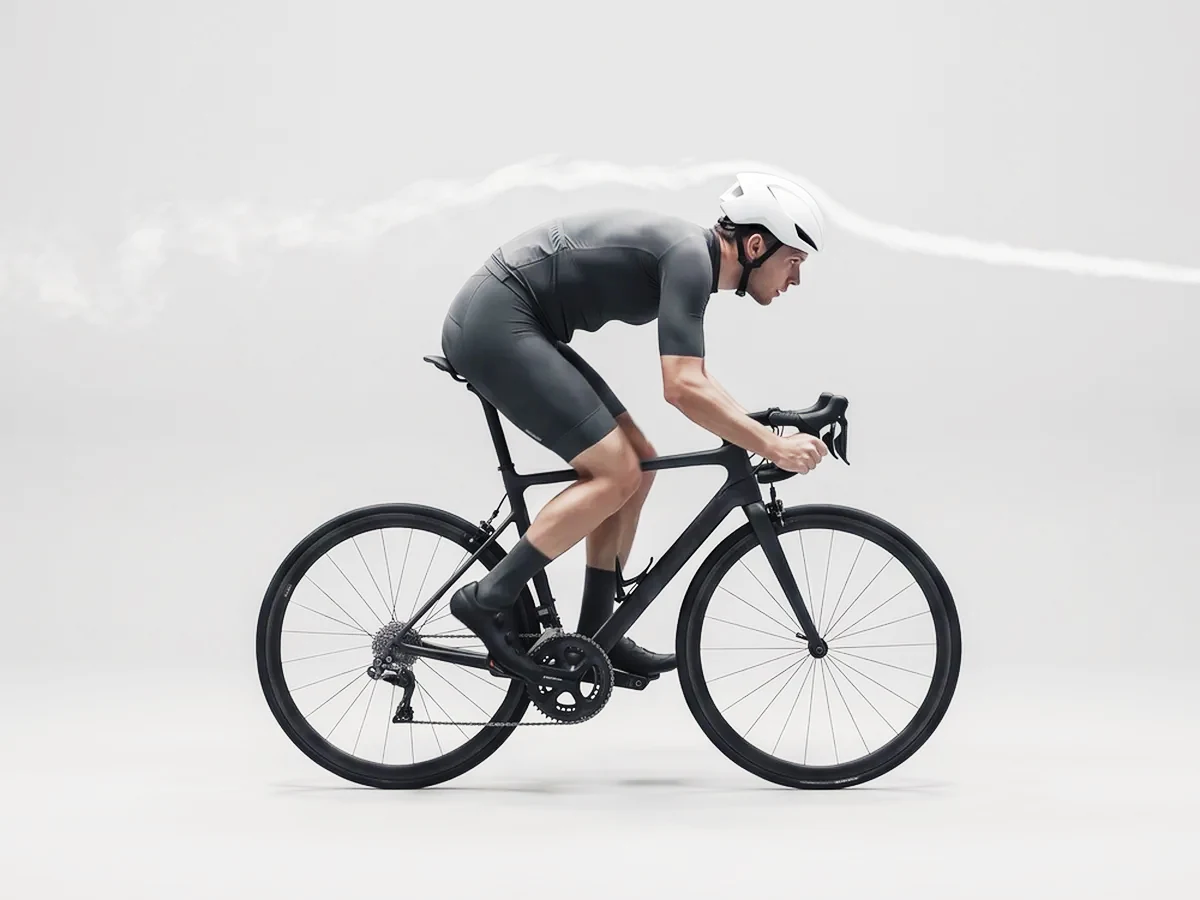
What riding low instead of in the medium position is worth on the example road ride, at the same power. It’s free.
0"
Aero socks on the road, for €35. In the tests they didn’t beat regular socks. Cheap doesn’t always mean worth it.
The two that matter
Tubeless. A tire rolls better without an inner tube. Compared with a butyl tube on a test drum at about 29 km/h (18 mph), each tire saves 1.3 to 3.8 W on the road1, 2.8 to 5.1 W on average on gravel2 and 2.5 to 7.7 W on the MTB3. You do need tubeless-ready rims and tires4. Tape, valves and sealant come to about €45–50. If the tire won’t seat with a floor pump, you’ll also need a booster pump or a compressor. Tubeless has its own guide.
If your rims or tires aren’t tubeless-ready, you can run TPU or latex tubes for about €40 a pair. Latex tubes lose only 0.2 to 0.5 W more per tire than tubeless, depending on the pressure1. In the calculator they’re worth about 70% of what tubeless is. These have their own guide too.
Waxed chain. A dirty chain wastes watts. At 250 W, wax is worth 1 to 6 W over a drip lube. That’s not much if the chain was already clean and well lubed, and a lot if it was dirty5. Wax and solvents cost about €50. If you don’t have a slow cooker, chain pliers and quick links, add about €60–75. The catch is that the chain needs a deep clean the first time, and you have to rewax about every 300 km (190 mi) on dry roads6. Waxed chains have their own guide too.
What they’re worth on the example ride
The table lists every item in the calculator that costs €50 or less, each one on its own, without the others. Tubeless and the chain are the top two in the table in all four disciplines, and on the ladder only tires can beat them. The rest are worth a few seconds, except the bottle between the aero bars in triathlon.
The race skinsuit isn’t in the table. In the calculator it costs €50 more than a close-fitting jersey and shorts, which run about €200, but at checkout it’s €250. If you already own a close-fitting jersey and shorts, you pay full price for the skinsuit.
NUMBERS FROM THE CALCULATOR
On the example ride for each discipline, with a 74 kg rider. Each upgrade is counted on its own, without the others.
| Seconds · cost · rank | ROAD | GRAVEL | MTB | TT AND TRIATHLON |
|---|---|---|---|---|
| Going tubeless | −1'40"€452nd | −2'20"€451st | −2'10"€501st | −2'00"€452nd |
| Clean, waxed chain | −1'00"€503rd | −1'10"€503rd | −1'20"€503rd | −0'55"€503rd |
| Light bar tape | −0'01"€3513th | −0'01"€3512th | — | — |
| Ultralight foam grips | — | — | −0'04"€154th | — |
| Bottle between the aero bars | — | — | — | −0'45"€454th |
—: not counted in that discipline. Updated from the calculator on NOVEMBER 18, 2026.
The rest: a few seconds
In the tests, aero socks didn’t beat regular socks. On the example road ride, light bar tape is worth −0'01". Foam grips on the MTB are worth −0'04". They’re only worth a look once you’re already tubeless with a waxed chain, and even then they don’t do much.
Triathlon is different. The bottle between the aero bars is worth −0'45" for €45. A bottle on the down tube adds drag, while one between the aero bars adds much less8. It’s banned in UCI time trials, though9. It has its own guide.
For free
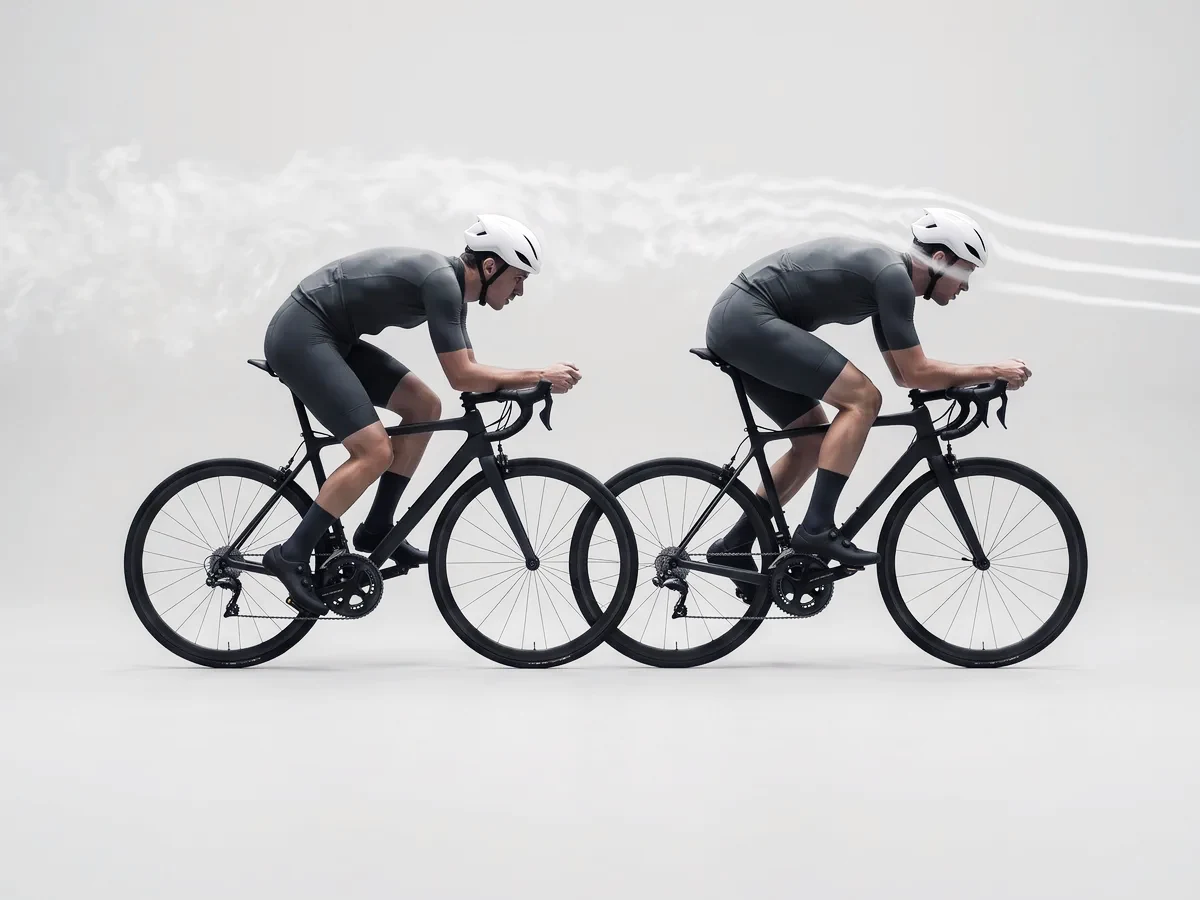
Position. Riding low instead of in the medium position, at the same power, gains you −3'20" on the example road ride, −3'00" on gravel and up to −5'00" in a time trial. On the MTB it’s much less, −0'40", because you’re going slower. On the road and in a time trial it’s worth more than everything in the table combined, but give yourself time to get used to it. Here’s the guide.
Drafting. If you ride in a group, sitting on a wheel saves you far more effort than any part. Here’s the guide.
If you can stretch to €100–110
A bit more money gets you fast-rolling tires, worth −3'20" on gravel for €95. On the road they cost €110 and are worth −4'20". If your tires need replacing anyway, you only pay the price difference. The road, gravel and MTB pages show what pays off with €100, €300 and €1,000. For Black Friday we have a separate guide on how much to spend.
If it’s a gift
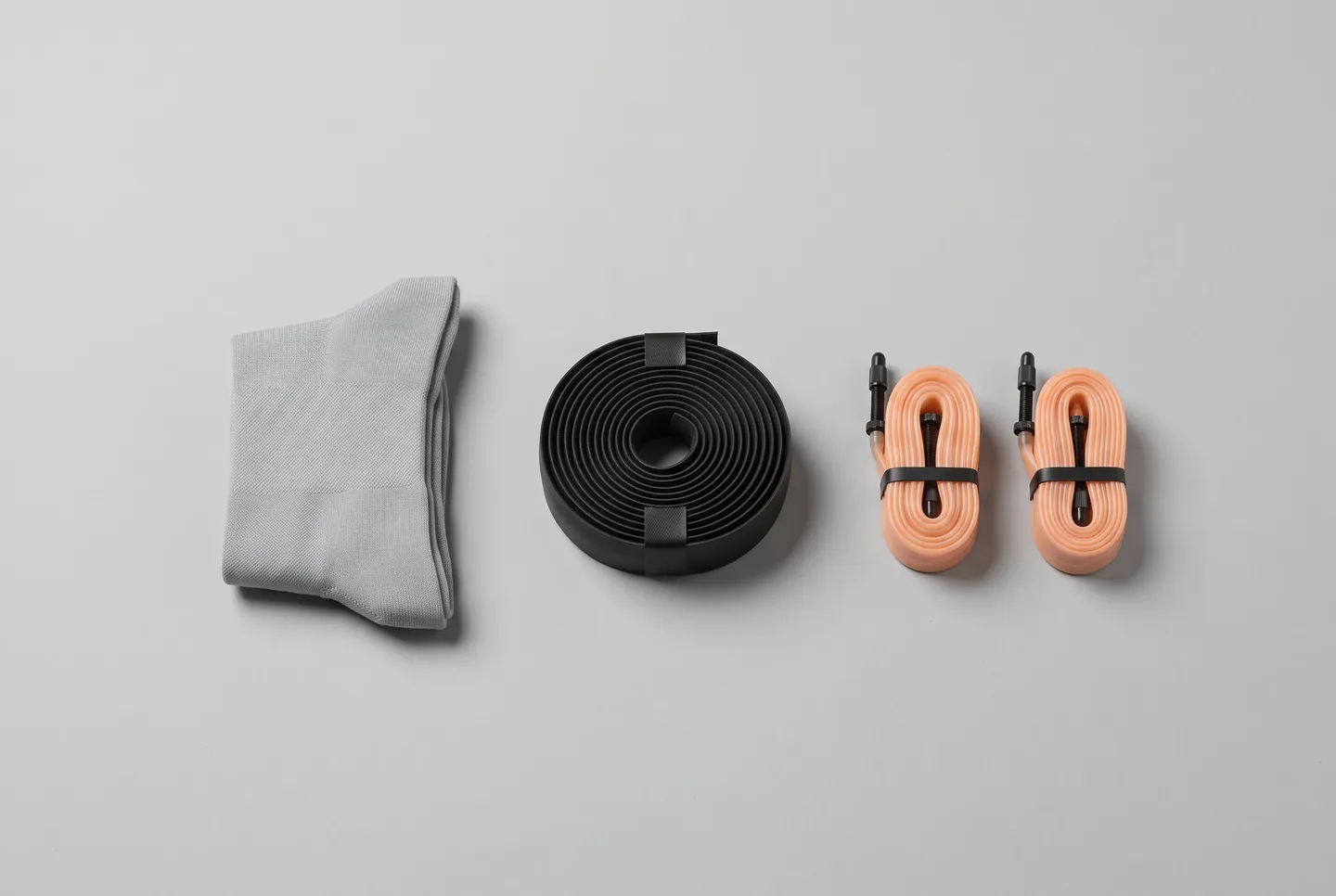
- Tubeless. First find out whether their rims and tires are tubeless-ready4. If they aren’t, the kit is useless. You also need the rim’s internal width for the tape, and the rim depth for the valve length.
- TPU or latex tubes. You need the tire size and the valve size. With rim brakes, check what the maker says, since at least one recommends its TPU tubes only for disc brakes7.
- Chain wax. It’s a gift that comes with homework. The chain needs a deep clean the first time, then a fresh dip about every 300 km (190 mi) on dry roads, sooner off-road or after rain6. Whoever gets it also needs a slow cooker. It suits someone who likes working on their own bike.
- Aero socks. All you need is the size. In the tests they didn’t beat regular socks. Get them if you like them, not for the clock.
When it’s not worth it
If you’re already tubeless and your chain is clean, there’s not much left to gain under €50, apart from the bottle between the aero bars in triathlon. You’re better off saving the money for tires, or working on your position.
If you don’t want to rewax about every 300 km (190 mi) on dry roads, and more often off-road or in the rain, a waxed chain isn’t for you6.
Sources
We read every source ourselves. They’re the same ones used in the guides on tubeless, inner tubes, waxed chains and the bottle between the aero bars, and they’re all public pages you can read for free. The seconds and prices come from the calculator, and the sources for each item are in “How we rank”. We don’t link to stores, because the site doesn’t tell you where to buy.
- Bicycle Rolling Resistance, 2022. The same 25 mm road tire, tubeless and with ten latex, TPU and butyl tubes, at 28.8 km/h (18 mph) and three pressures. Article
- Bicycle Rolling Resistance, 2022. Eight gravel tires, tubeless and with a butyl tube, at four pressures: tubeless saved on average 2.8 to 5.1 W per tire. Article
- Bicycle Rolling Resistance, 2014. A 29 × 2.2 MTB tire: tubeless, with a latex tube and with a butyl tube, at five pressures. Article
- BikeRadar, 2025. What tubeless is: sealant, pinch flats, rim and tire compatibility, when it’s not worth it. Article
- Velo, 2013 and 2014. Friction Facts lube tests at 250 W, with clean chains and after an hour of dirt and water. The PDF is a reprint that adds a product to the summary chart. PDF
- Zero Friction Cycling. Australian lab that also sells waxes and chains. Waxing instructions: prep, intervals, rain. Instructions
- Bikerumor. A tube maker recommends its TPU tubes only for bikes with disc brakes, because of the heat from rim brakes. Maker’s data. Article
- Aerocoach, 2020. Bottles on the track, with a sensor that measures CdA: one rider on a time trial bike, at 30 and 40 km/h (19 and 25 mph), bottles of various sizes on the down tube, on the seat tube, between the aero bars and behind the saddle. Aerocoach does aerodynamics testing and sells wheels and components, not the bottles tested. Article
- UCI, 2023. Guide to the technical regulations, edition of January 1, 2023: bottles (1.3.024 bis). Guide (PDF)