GUIDES · GRAVEL
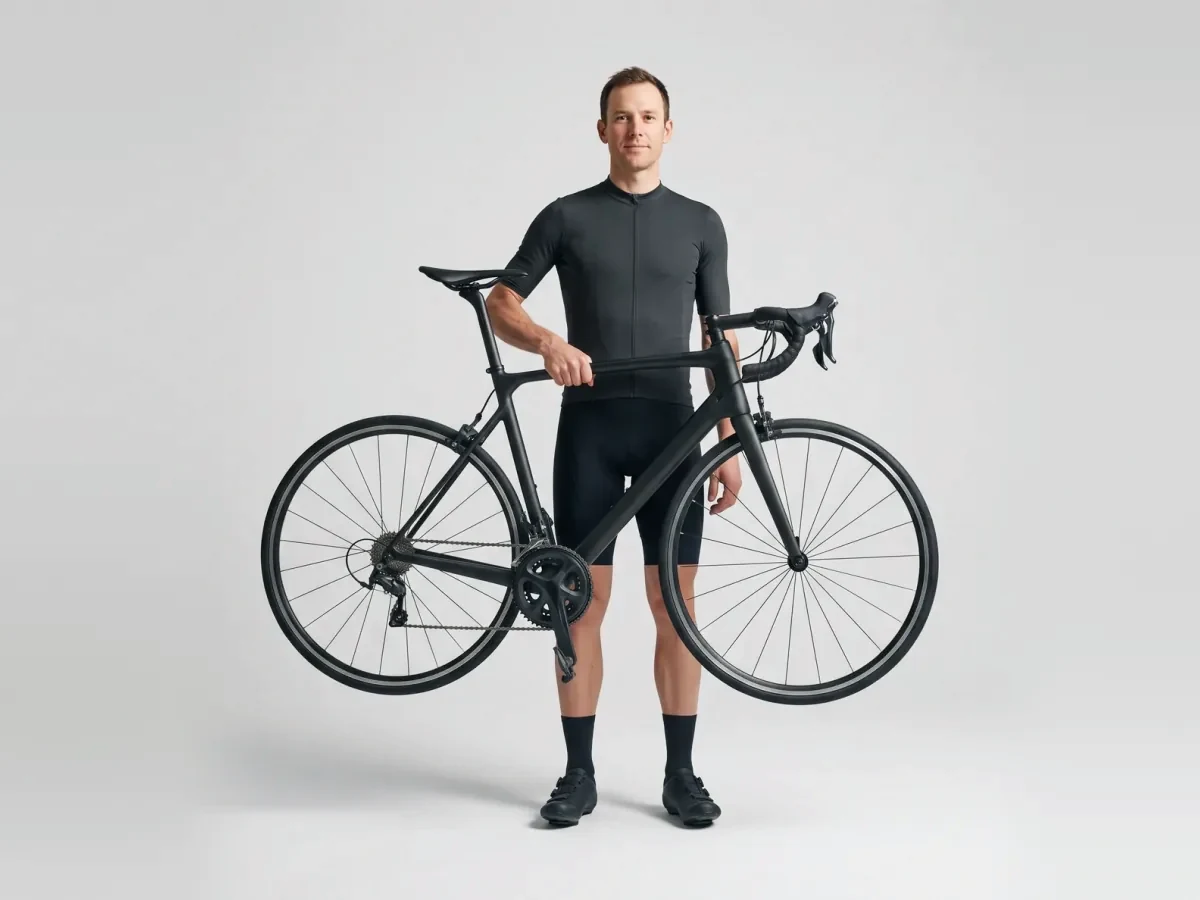
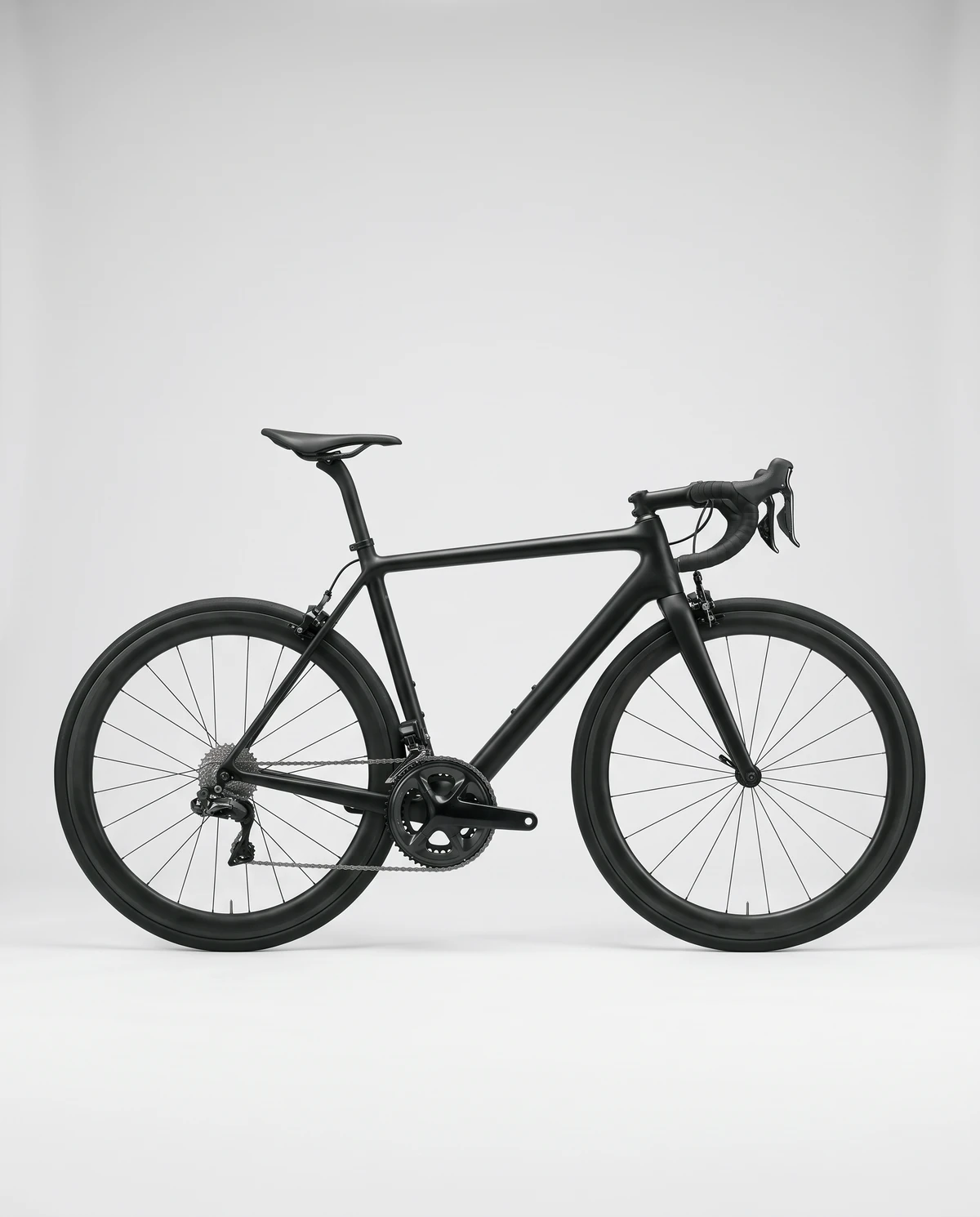
Gravel bike vs road bike: how much slower a gravel bike is on the road.
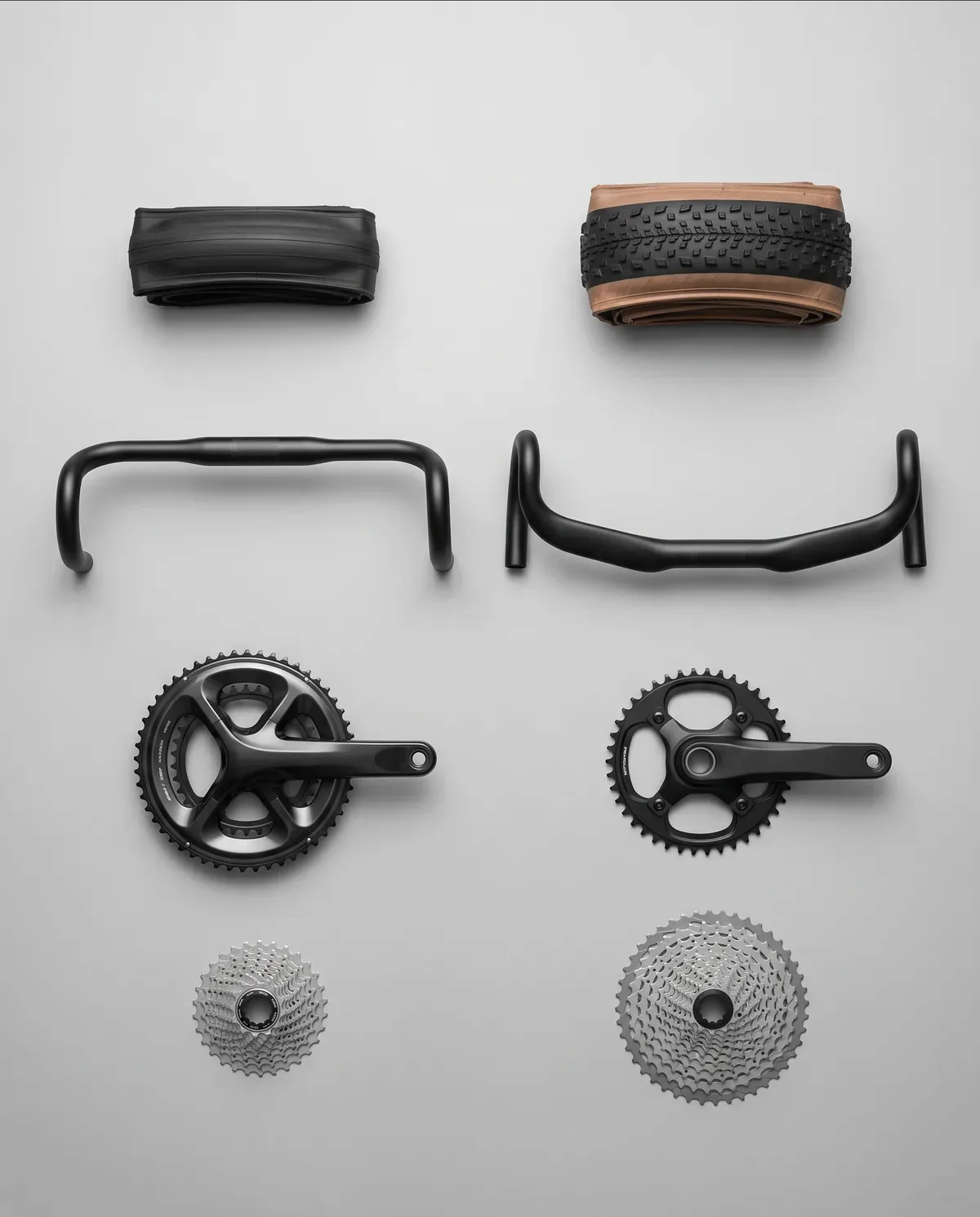
A gravel bike is slower on pavement, but not by as much as you’d think. In a test at 275 W on the flat, the road bike was 1.24 km/h (0.77 mph) faster, and on the climb the gap was close to zero. On the calculator’s example ride at 200 W, the gravel bike takes about 7 minutes longer over almost three hours, and by our math about half of that comes from the tires. This guide covers the tests, the numbers and what to change if you ride your gravel bike on the road.
+7'
How much longer the gravel bike takes by our math on the example road ride, 80 km (50 mi) with 900 m (2,950 ft) of climbing, at 200 W.
1.24 km/h
How much faster (0.77 mph) the road bike was at 275 W on the flat in a road test.
0.2 km/h
The gap (0.1 mph) on the climb in the same test, at about 12 km/h (7 mph). That may be within the margin of error.
Up to 4'
How much you could win back on the same ride, by our math, by swapping tough gravel tires for road tires on the gravel bike.
What the tests say
On the flat. road.cc tested a gravel bike on 45 mm tires against a road bike on 28 mm tires at the same 275 W. The road bike was 1.24 km/h (0.77 mph) faster on average, which is just under three minutes over an hour1. GCN ran a similar test with an aero road bike on 28 mm tires and a gravel bike on 50 mm tires. Around 24 km/h (15 mph) the gap was small. At 37 km/h (23 mph) the gravel bike was 1.8 km/h (1.1 mph) slower, though at 9 W less. Motor-paced at around 48–49 km/h (30 mph), it needed almost 30 W more and was still slower2.
Climbing. In the road.cc test, on a steep climb at about 12 km/h (7 mph), the gap was 0.2 km/h (0.1 mph), which may be within the margin of error1. On a 600 m (1,970 ft) climb in the GCN test, the times were almost the same2.
Descending. In the road.cc test, coasting over 400 m (1,310 ft), the road bike was faster1.
The two bikes weren’t evenly matched. In the road.cc test the road bike had deep-section wheels, and the gravel bike had semi-slick tires at higher pressure than you’d run off-road. The gravel bike weighed about 500 g (1.1 lb) more1. These are road tests with one rider and two bikes, not lab measurements.
On the example ride
We ran both bikes through the calculator’s power model45 on the example road ride, 80 km (50 mi) with 900 m (2,950 ft) of climbing, all on pavement and at the same average power.
80 KM (50 MI) RIDE WITH 900 M (2,950 FT) OF CLIMBING
| POWER | ROAD | GRAVEL | EXTRA |
|---|---|---|---|
| 150 W | 3h21'15" | 3h30'17" | +9'02" |
| 200 W | 2h51'51" | 2h58'48" | +6'57" |
| 250 W | 2h33'26" | 2h39'09" | +5'43" |
With the same assumptions at 275 W on the flat, the model puts the gravel bike 1.2 km/h (0.7 mph) slower, close to what road.cc measured1. The bikes in the test weren’t the ones in our math, though, so it’s only a rough check. The harder you push, the smaller the gap. You finish the ride sooner, and at higher speed the tires matter less next to the air.
Where the difference comes from
WHERE THE 6'57" COMES FROM, AT 200 W
| CHANGE | EXTRA TIME |
|---|---|
| Gravel tires | +3'42" |
| More air drag | +2'07" |
| 1.8 kg more | +1'04" |
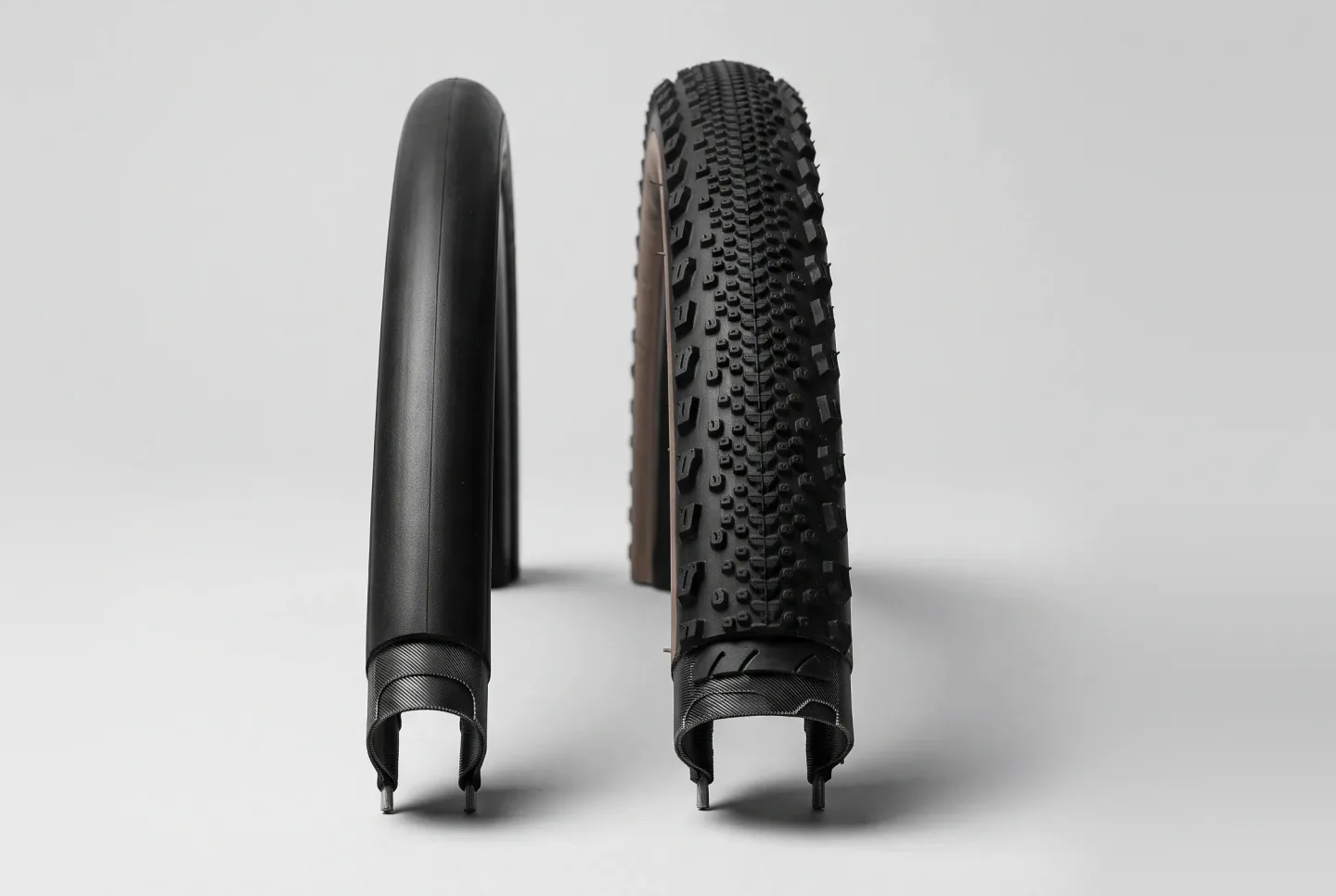
The tires. In our math they’re the biggest share. A wide knobby tire rolls slower on pavement than a slick road tire. It also adds air drag. In the wind tunnel, Cyclingnews measured 6.6–8.7 W more with 47 mm gravel tires than with 40 mm road tires, depending on the wheels3. In FIG. 04, that part sits in the air drag row.
The air. On a gravel bike you usually sit a bit higher, and the bar is often wider and flared1. In the wind tunnel, one of the most aero gravel bikes, with a rider on board, was about 20 W behind an aero road bike and 28 W behind one of the fastest road bikes tested3. Those tests weren’t run at the same speed, though, and the gravel bike had 45 mm tires, so the 20 W includes the tires’ air drag. Treat the comparison as a rough guide.
Weight. It doesn’t matter much. In our math the gravel bike weighs 1.8 kg (4 lb) more, and that costs about a minute over almost three hours, nearly all of it on the climbs. In the road.cc test the gap was about 500 g (1.1 lb)1.
How the gap splits between tires and air depends on our assumptions. With faster-rolling gravel tires and a higher position, the air’s share grows and the tires’ share shrinks.
If you ride your gravel bike on the road
- Change the tires. If you’re on tough gravel tires, switching to standard road tires wins back up to about 4 of the 7 minutes on the example ride at 200 W. If yours already roll fast, you’ll get much less. For pressure, see the guide on gravel tire pressure.
- Get low when you can. On descents and on the flat, the air is what counts. We have a guide on aero position.
- In a group you’ll work harder. road.cc says that on the flat and on descents, keeping up with a group on a gravel bike takes about 30 W more, depending on how much you sit on a wheel1.
If you ride on pavement almost all the time, the road bike is faster on the flat and on descents12. On climbs the gap is small12, and on dirt a gravel bike can go places a road bike can’t. For picking tires, see also the guide on 28 vs 32 mm tires.
In the calculator, pick road or gravel and enter your ride to see which upgrades are worth the most on your bike.
Sources
We read every source ourselves. They’re all public pages you can read for free. For the study by Martin and colleagues, we read the abstract.
- road.cc, 2023. Gravel bike with 45 mm tires against a road bike with 28 mm tires: descent, flat at 275 W, steep climb. Article
- GCN, 2023. Gravel bike with 50 mm tires against an aero road bike with 28 mm tires: on the flat at about 25 and 37 km/h (16 and 23 mph), motor-paced and uphill. Article
- Cyclingnews, 2025. Gravel bikes in the wind tunnel with the same 45 mm tires on all of them: the comparison with the road bikes tested earlier and the one between 40 mm road tires and 47 mm gravel tires. Article
- Crouch, Burton, LaBry and Blair, 2017. Scientific review of cycling aerodynamics, in Sports Engineering: the power model by Martin and colleagues. Study (PDF)
- Martin, Milliken, Cobb, McFadden and Coggan, 1998. Journal of Applied Biomechanics. The power model tested on the road with a power meter: R² 0.97 between calculated and measured watts, standard error 2.7 W. Abstract