GUIDES · DRIVETRAIN
Maintenance that costs you watts.
In a lab test at 250 W, an hour of dirt and water made the chain lose about 2 W more with most lubes. On the calculator’s example gravel ride, that’s about a minute. Bearings matter too. One estimate puts the gap between hubs with good bearings and hubs with cheaper ones at about 3 W at 40 km/h (25 mph), and that gap comes more from quality than from maintenance. This guide covers what poor maintenance costs you in watts, seconds and worn parts, and what to check.
1'03"
The time 2 W adds on the example gravel ride, 62 km (39 mi) with 780 m (2,560 ft) of climbing. That’s about what a dirty chain costs.
~6 W
The gap between the best and worst lube after the dirt, in the Friction Facts test at 250 W.
2,000 km
How long a chain can last with the wrong lube and poor maintenance (about 1,240 mi). Done right, it can last up to 20,000 km (12,400 mi).
2.5–6 W
What the bearings in both hubs can cost you at 40 km/h (25 mph), depending on their quality, according to an estimate by Jason Smith.
The dirty chain
In 2013 Friction Facts measured chains lubed with different products at 250 W, first clean and then after an hour of dirt, grit and water1. With most lubes, including greases, oils and drip lubes, the chain lost about 2 W more. The worst drip lube, a wax-based one, lost over 3.5 W more and left the chain bone dry. With immersion wax, where the chain is dipped in melted paraffin, the chain was actually faster after the dirt than before, by over 0.5 W. That left almost 6 W between the best and the worst1.
These are lab tests on carefully cleaned and lubed chains, and on the road the losses can be higher2. Zero Friction Cycling doesn’t measure watts, but it says that after the contamination blocks in its tests, some of the worst lubes get to about 20 W lost at 250 W, and the best to about a quarter of that3. That’s an estimate, not a measurement.
Waxed chains have their own guide.
The worn chain
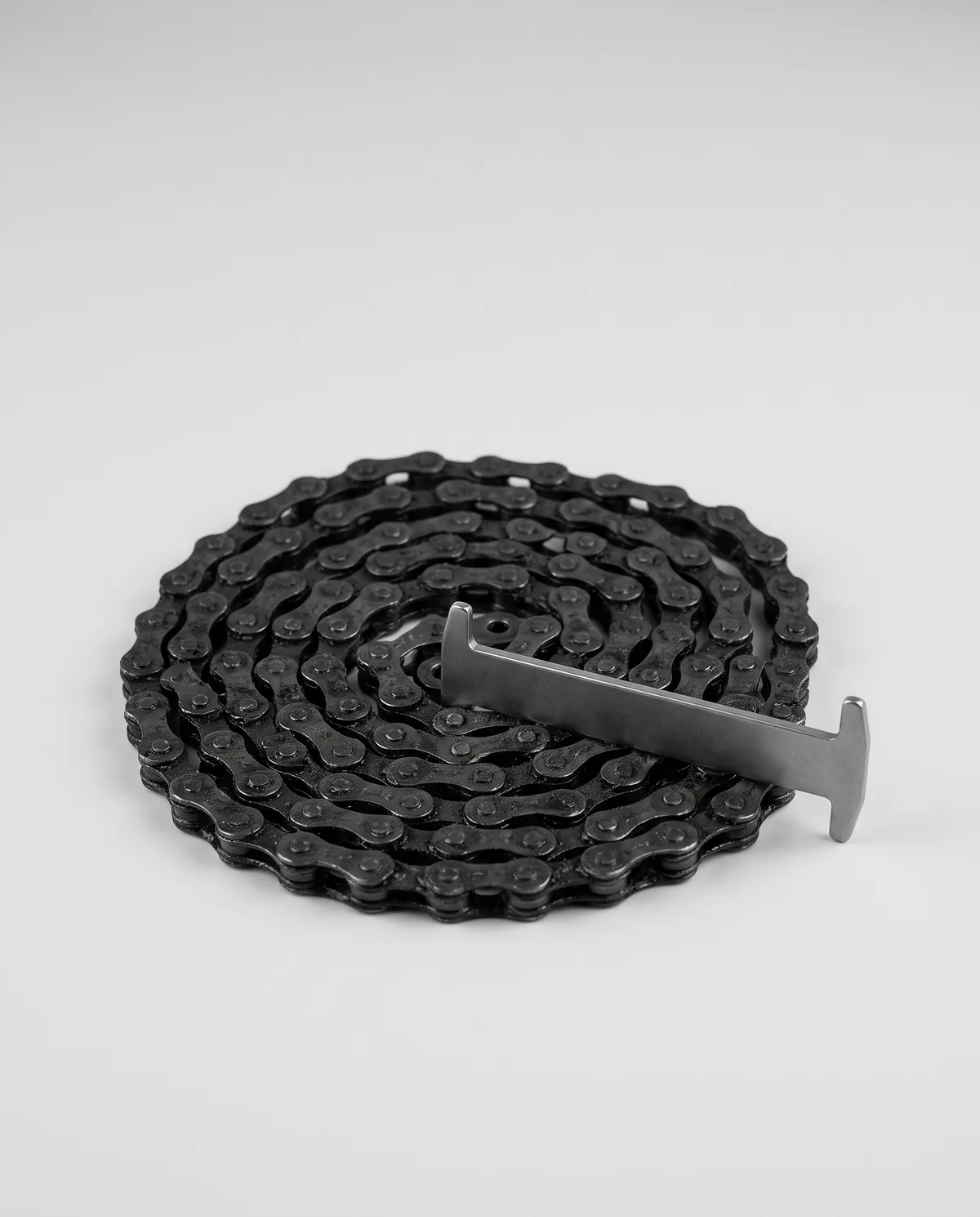
Dirt costs you more than watts. Mixed with lube it turns into a grinding paste that wears out the chain3. Depending on the lube and how you look after it, a chain can be worn out at 2,000 km (1,240 mi) or last 20,000 km (12,400 mi)2.
Cogs and chainrings wear out too. Zero Friction Cycling replaces chains at 0.5%. Based on its tests, it estimates that on an 11-speed road drivetrain with the worst lube you go through 7.3 chains, 3.7 cassettes and 1.2 chainrings every 10,000 km (6,200 mi). With the best lube, it’s 0.4 chains, 0.2 cassettes and 0.1 chainrings3. Zero Friction Cycling also sells lubes and chains.
When to replace it. You measure stretch with a chain checker. On 11-speed and up, replace the chain at 0.5%; on 10-speed and below, at 0.75%6. We have a guide on when to replace a chain and how to measure it.
The bearings
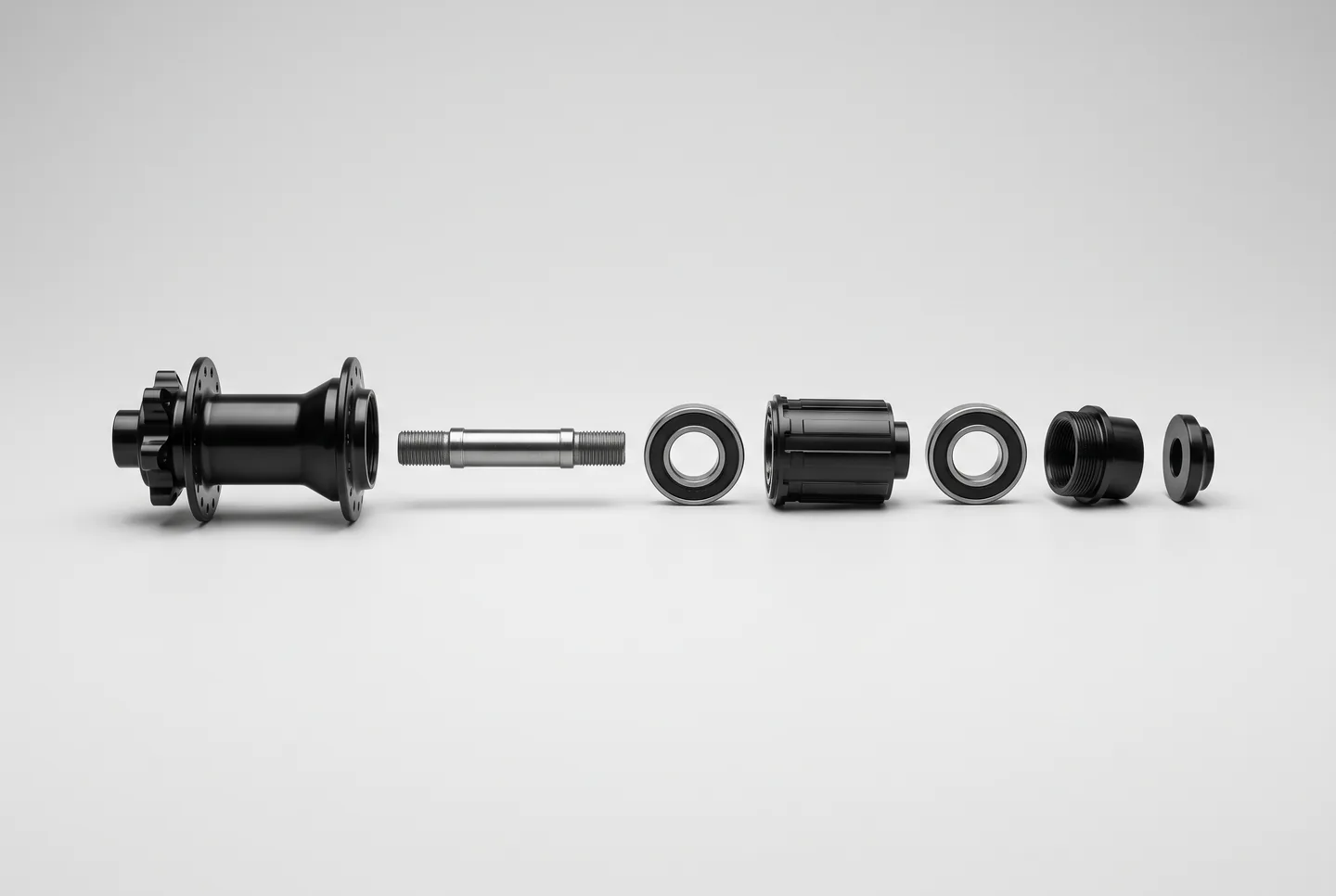
The hubs. Jason Smith used data from his bearing tests to estimate hub friction. With good bearings it’s about 1 W for the front hub and 1.5 W for the rear while you pedal, about 2.5 W in all. With cheaper bearings it’s about 5–6 W4. These are estimates at about 40 km/h (25 mph), not measurements on real wheels, and at lower speeds the friction in watts is lower.
The bottom bracket. In the Friction Facts tests at 95 rpm, loaded as if someone were pedaling at 250 W, a pair of greased bottom bracket bearings lost 0.46 W on average. The seals alone accounted for 0.02 W on average with a light oil and 0.11 W with grease5. The same report estimates that the bottom bracket, hubs and freehub body together have about 7.5 times the friction of the bottom bracket alone. In the report’s examples that comes to between about 1 and about 6 W in all, depending on the lubricant5. The two estimates were made under different conditions, which is why they don’t match.
Dirt. Seals keep out dirt, which adds friction and ruins bearings. For mud you need tighter seals, and those drag a bit more5. None of these sources measured how many watts a dirty or worn bearing costs.
In the calculator, a ceramic bottom bracket is worth a few seconds. Ceramic bearings have their own guide.
What it’s worth in seconds
WHAT THE LOST WATTS ARE WORTH
| WATTS | ROAD | GRAVEL | MTB |
|---|---|---|---|
| 1 W | 0'27" | 0'31" | 0'42" |
| 2 W | 0'54" | 1'03" | 1'26" |
| 3 W | 1'22" | 1'35" | 2'09" |
| 5 W | 2'17" | 2'39" | 3'38" |
Treat these as a ballpark. The average power on the example rides is lower than the 250 W in the tests, and at lower power the chain loses fewer watts. On the other hand, dirt can matter more outside the lab. For comparison, oversized derailleur pulleys are worth −0'30" on the gravel ride in the calculator and cost €450.
What to do
- Chain. Clean and lube it often. Jason Smith says ideally after every ride, or at least relube it2. After mud or rain, do it right away.
- Wear. Check the chain with a chain checker and replace it at 0.5%, or at 0.75% on 10-speed and below6.
- Hubs. Spin the wheels by hand to feel for roughness, and rock the rim side to side to check for play. On cup-and-cone hubs you adjust out the play, and if they feel rough they need an overhaul. Cartridge bearings can’t be adjusted, only replaced7.
Enter your ride in the calculator to see what a clean, waxed chain is worth next to the other upgrades.
Sources
We read every source ourselves. They’re all public pages you can read for free. Jason Smith founded Friction Facts, which was later bought by a maker of bearings and drivetrain parts. Zero Friction Cycling sells lubes and chains.
- Velo, 2013 and 2014. Friction Facts tests of lubes at 250 W, with clean chains and after an hour of dirt and water. The PDF is a reprint that adds a product to the summary chart. PDF
- Velo, 2018. Dave Rome on Zero Friction Cycling’s lube durability tests: chains lasting from 2,000 to 20,000 km, the wear limit, the watts of a dirty chain according to Jason Smith, maintenance advice. Article
- Zero Friction Cycling, 2021. Charts and protocol of the wear tests: dirt and abrasion, estimated watts lost after contamination, chains, cassettes and chainrings worn out every 10,000 km. PDF
- Velo, 2014. Lennard Zinn’s Technical FAQ, with Jason Smith’s analysis of hub bearing friction: about 2.5 W for the two hubs with efficient bearings, 5–6 W with less efficient ones. Article
- Friction Facts. Lubricants and seals on three pairs of bottom bracket bearings, at 95 rpm with the load of someone pedaling at 250 W. With an estimate of hub friction. The PDF is republished, with a 2018 copyright, by the bearing maker that bought the lab. Report (PDF)
- Park Tool. When to replace the chain: 0.5% elongation for 11-speed and up, 0.75% up to 10-speed. Guide
- Park Tool. Adjusting cup-and-cone hubs. Cartridge bearings can’t be adjusted, only replaced. Guide