GUIDES · CLIMBING
How many watts you need to climb.
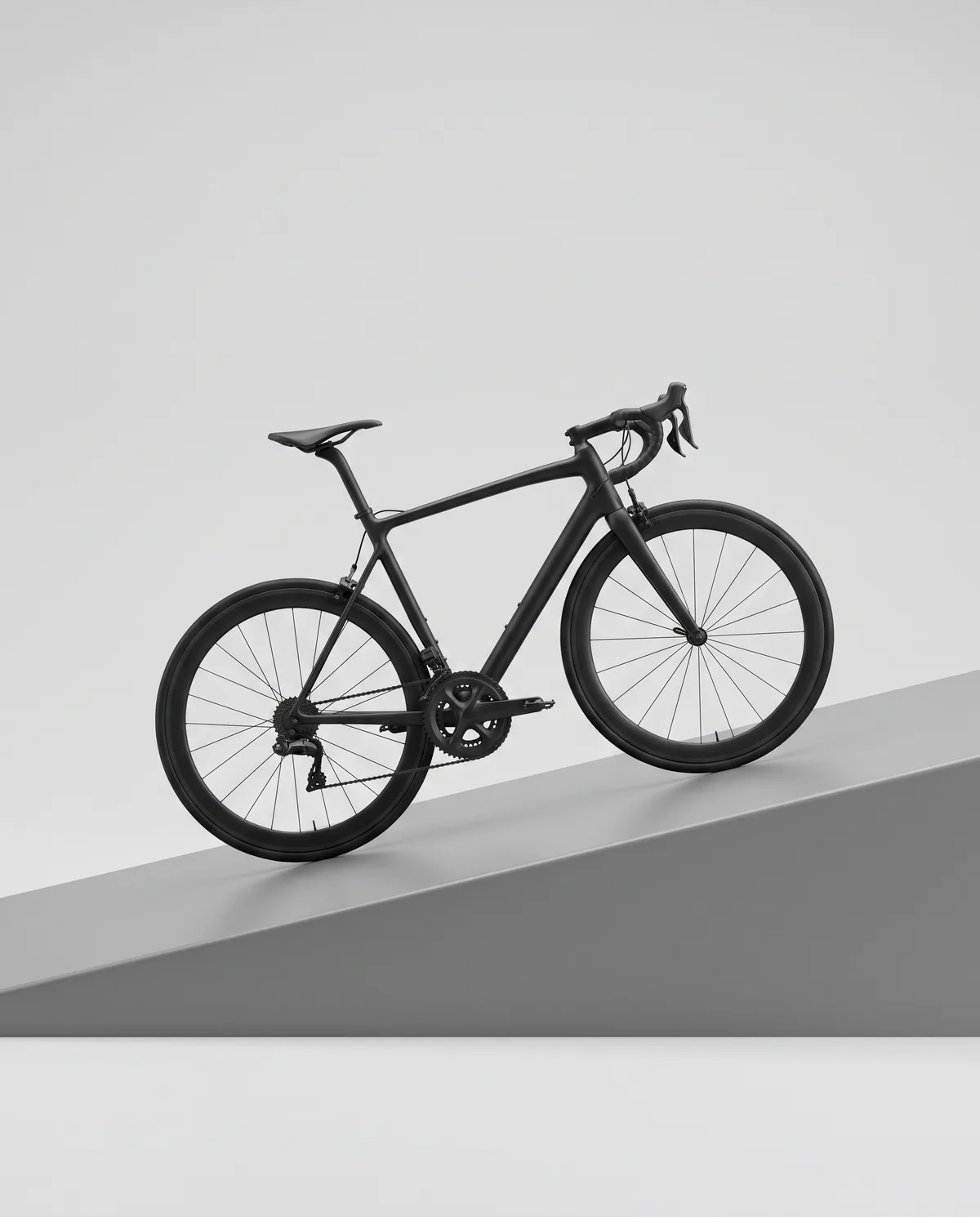
On an 8% climb, a 74 kg (163 lb) rider on a road bike needs about 249 W to hold 12 km/h (7 mph), or 3.4 W per kilo. At 15 km/h (9 mph) it takes 317. On climbs the air barely matters and weight matters a lot, which is why watts per kilo count for more than raw watts. These numbers come from the calculator’s model. This guide has tables by grade, speed and weight, how long a climb takes and what changes on dirt.
249 W
The watts you need to climb an 8% grade at 12 km/h (7 mph) on a road bike, for a 74 kg (163 lb) rider.
3.4 W/kg
The same watts divided by the rider’s weight. That’s the number that counts on climbs.
3%
How much of that power goes into pushing air. On the flat at 30 km/h (19 mph) it’s 76%.
24'54"
How long the same rider takes to climb 5 km (3.1 mi) at 7% at 3 W/kg, or 222 W.
How we calculate them
On a climb, most of the power you put through the pedals goes into lifting you and the bike. The rest goes into tire rolling resistance, the air and, a little, the drivetrain. We use a simplified, constant-speed version of the model by Martin and colleagues, as laid out in the review by Crouch and colleagues1. Tested on the road against a power meter, the full model came within a typical 2.7 W of the measured watts2.
For the tables we use the calculator’s starting values: a 74 kg (163 lb) rider plus 1.5 kg (3.3 lb) for helmet, shoes and clothing, an 8.6 kg (19 lb) road bike, CdA 0.38 m² in the medium position, Crr 0.0055 with standard tires, air density 1.2 kg/m³ and 2.5% lost in the drivetrain. No wind, constant speed. It’s the same model as in the guide on how many watts you need at 30, 35 and 40 km/h.
Grade and speed
WATTS UPHILL, ON THE ROAD, 74 KG (163 LB)
| GRADE | 12 km/h (7 mph) | 15 km/h (9 mph) | 20 km/h (12 mph) |
|---|---|---|---|
| 5% | 165 W 2.2 W/kg | 212 W 2.9 W/kg | 301 W 4.1 W/kg |
| 8% | 249 W 3.4 W/kg | 317 W 4.3 W/kg | 441 W 6.0 W/kg |
| 10% | 305 W 4.1 W/kg | 387 W 5.2 W/kg | 534 W 7.2 W/kg |
Watts go up with speed. On a climb almost all your power goes into beating gravity, and gravity doesn’t change with speed, so the watts you need rise almost in step with speed. At 8%, going from 12 to 15 km/h (7 to 9 mph) takes you from 249 to 317 W, 27% more for 25% more speed. On the flat, the power needed to push air goes up with the cube of speed1.
The air barely matters. The steeper the road, the less the air counts1. At 8% and 12 km/h (7 mph) it’s about 3% of your power, and at 5% and 20 km/h (12 mph) about 13%. That’s why position and aero upgrades don’t do much on climbs either.
Weight and watts per kilo
WATTS AT 8%, ON THE ROAD, BY WEIGHT
| RIDER | 12 km/h (7 mph) | 15 km/h (9 mph) | 20 km/h (12 mph) |
|---|---|---|---|
| 60 kg (132 lb) | 209 W 3.5 W/kg | 267 W 4.5 W/kg | 374 W 6.2 W/kg |
| 74 kg (163 lb) | 249 W 3.4 W/kg | 317 W 4.3 W/kg | 441 W 6.0 W/kg |
| 90 kg (198 lb) | 295 W 3.3 W/kg | 375 W 4.2 W/kg | 517 W 5.7 W/kg |
A 90 kg (198 lb) rider needs about 46 W more than a 74 kg (163 lb) rider to climb an 8% grade at 12 km/h (7 mph). Per kilo of body weight, though, he needs slightly less. The bike weighs the same for everyone, so it’s a smaller share of his total. To work out your own W/kg, see the guide on FTP and W/kg.
One kilo less. At 8% and 12 km/h (7 mph), losing 1 kg (2.2 lb) is worth about 2.9 W, whether it comes off you or the bike. Weight has its own guide.
How long it takes
5 KM (3.1 MI) AT 7%, ON THE ROAD: HOW LONG IT TAKES
| W/KG | 60 kg (132 lb) | 74 kg (163 lb) | 90 kg (198 lb) |
|---|---|---|---|
| 2.0 W/kg | 37'41" | 36'34" | 35'42" |
| 2.5 W/kg | 30'29" | 29'33" | 28'49" |
| 3.0 W/kg | 25'44" | 24'54" | 24'16" |
| 3.5 W/kg | 22'22" | 21'37" | 21'02" |
| 4.0 W/kg | 19'52" | 19'11" | 18'38" |
At the same watts per kilo the times are close, but the 90 kg (198 lb) rider is about 5–6% faster than the 60 kg (132 lb) rider in the same position. The reason is the same as above. The bike weighs the same for everyone, so it’s a smaller share of his total.
Watts or kilos. On this climb at 250 W, losing 1 kg (2.2 lb) saves about 14 seconds and adding 5 W saves about 24.
VAM. Riders often talk about VAM on climbs, meaning how many vertical meters you gain per hour. At 3 W/kg on this climb, the 74 kg (163 lb) rider climbs about 840 m (2,760 ft) per hour.
There’s a guide on VAM in cycling, with what it is, how to calculate it and how fast the pros climb.
To run the numbers on your own climb, with your weight and either your watts or your time, use the climbing watts and VAM calculator.
On dirt
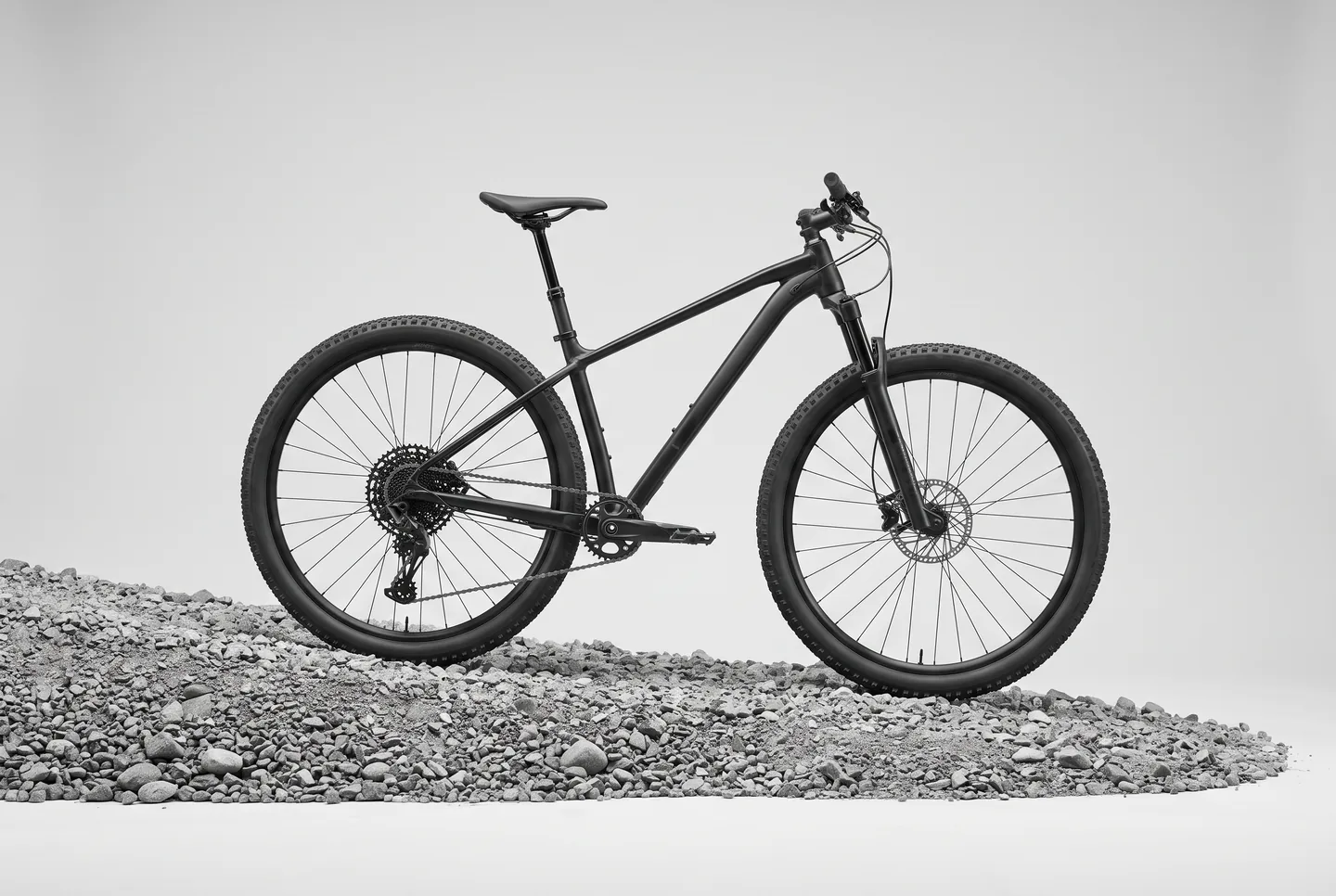
WATTS AT 8% BY SURFACE, 74 KG (163 LB)
| SPEED | ROAD | GRAVEL | MTB |
|---|---|---|---|
| 8 km/h (5 mph) | 163 W 2.2 W/kg | 175 W 2.4 W/kg | 198 W 2.7 W/kg |
| 10 km/h (6 mph) | 205 W 2.8 W/kg | 221 W 3.0 W/kg | 250 W 3.4 W/kg |
| 12 km/h (7 mph) | 249 W 3.4 W/kg | 268 W 3.6 W/kg | 303 W 4.1 W/kg |
On dirt the tires roll much worse and the bike is heavier. At 8% and 12 km/h (7 mph) you need about 268 W on a gravel bike on hardpack and 303 W on an MTB on loose dirt, versus 249 W on the road. On dirt climbs, rolling resistance makes most of the difference, much more than the bike’s weight, and the air hardly counts.
Off-road Crr varies a lot from one surface to the next. The value for loose dirt comes from measurements on cross-country courses. There are no solid measurements for hardpack, so the calculator uses an estimate. We explain both on the method page.
Your watts
These numbers are for the example rider at constant speed. On a real climb the grade keeps changing, and there are switchbacks, surges and wind, so your power meter will show different numbers. The air is thinner at altitude1, but on climbs that barely changes the watts you need.
In the calculator you can upload your ride and enter your weight, bike and position. Enter your average power and it also tells you your time.
Sources
We read every source ourselves. They’re all public pages you can read for free. For the study by Martin and colleagues, we read the abstract.
- Crouch, Burton, LaBry and Blair, 2017. Scientific review of cycling aerodynamics, in Sports Engineering: the power model by Martin and colleagues, power against the air with the cube of speed, how much the air counts on the flat and uphill, air density. Study (PDF)
- Martin, Milliken, Cobb, McFadden and Coggan, 1998. Journal of Applied Biomechanics. The power model tested on the road with a power meter: R² 0.97 between calculated and measured watts, standard error 2.7 W. Abstract