GUIDES · AERODYNAMICS
Wind: what a headwind costs you.
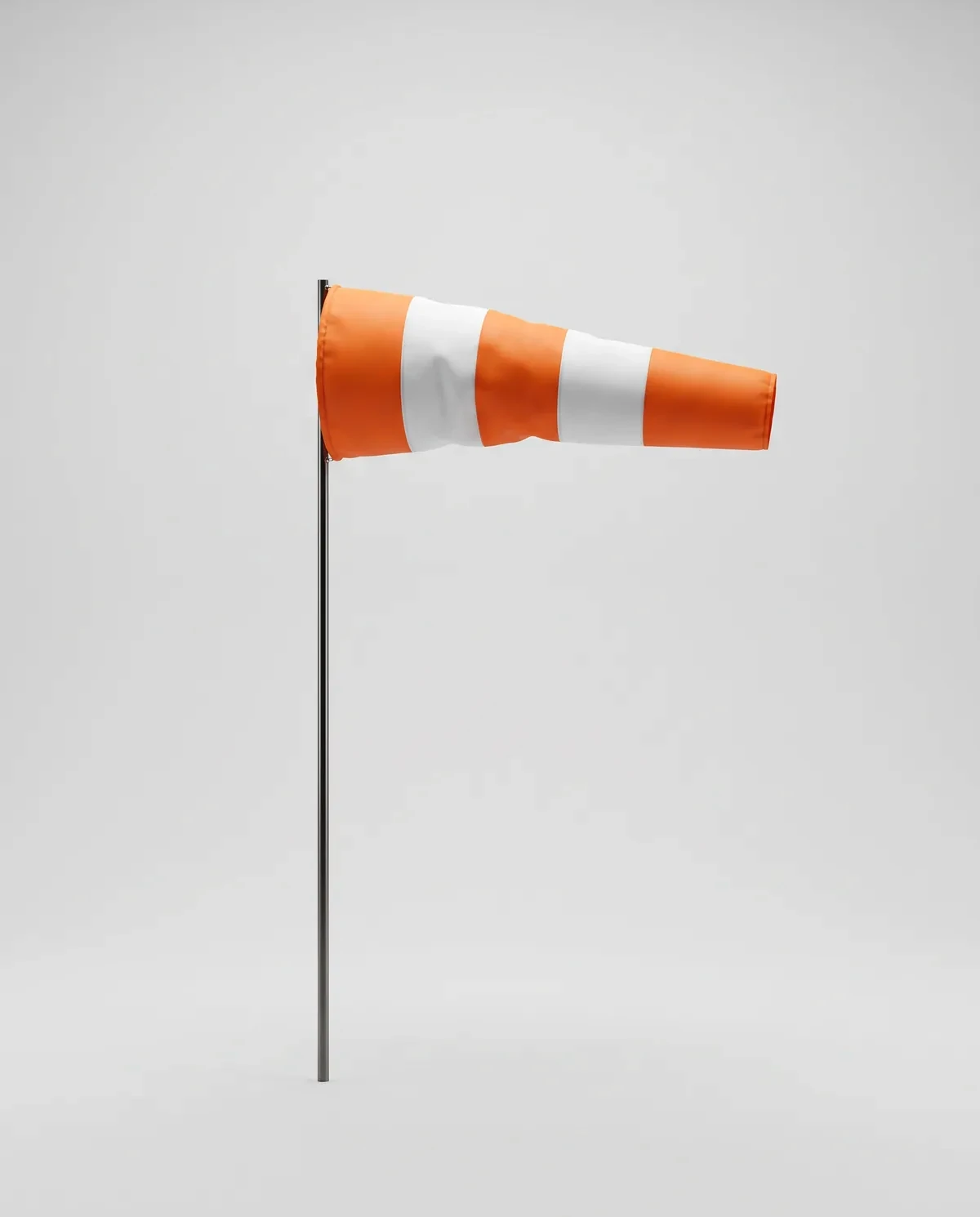
In a 10 km/h (6 mph) headwind, riding at 30 km/h (19 mph) on the flat takes about 279 W instead of 174. With the same wind at your back, about 99 is enough. On an out-and-back ride, wind always costs you time, even though it’s behind you for half of it, because you’re slower into the wind and spend longer in it. These numbers come from the calculator’s model, with the wind coming straight at you or straight from behind.
+2'07"
The extra time to ride 40 km (25 mi) out and back on the flat at 200 W in a 10 km/h (6 mph) wind. In a 20 km/h (12 mph) wind it’s 8'35".
279 W
The watts you need to ride at 30 km/h (19 mph) into a 10 km/h (6 mph) headwind. With no wind it’s 174.
99 W
All you need with the same wind at your back. You save 75 W with the tailwind, but you spend 105 more into the headwind.
2'08"
What a low torso is worth over 20 km (12 mi) into a 20 km/h (12 mph) headwind at 200 W. With no wind it’s 57 seconds.
Why a headwind costs so much
What holds you back is the speed of the air coming at you1, which is your speed plus the headwind, or minus the tailwind. Air resistance goes up with the square of that speed1. At 30 km/h (19 mph) into a 10 km/h (6 mph) headwind, the air pushes on you as if you were doing 40, but you’re only moving at 30. That’s why you don’t need the watts for 40 km/h (25 mph), which would be about 372.
It also means it doesn’t even out. At the same speed, a 10 km/h (6 mph) tailwind cuts air resistance by less than a 10 km/h (6 mph) headwind adds to it, because of the square.
How many watts you need
WATTS IN THE WIND, ON THE FLAT
| WIND | ROAD 30 km/h (19 mph) | GRAVEL 22 km/h (14 mph) |
|---|---|---|
| Headwind, 20 km/h (12 mph) | 415 W | 250 W |
| Headwind, 10 km/h (6 mph) | 279 W | 165 W |
| No wind | 174 W | 102 W |
| Tailwind, 10 km/h (6 mph) | 99 W | 62 W |
| Tailwind, 20 km/h (12 mph) | 54 W | 46 W |
Into a 20 km/h (12 mph) headwind, holding 30 km/h (19 mph) takes 415 W, almost two and a half times as much as with no wind. At that speed in that wind, air is about 90% of the resistance.
On gravel you’re slower, but the wind is the same. At 22 km/h (14 mph) into a 10 km/h (6 mph) headwind, the watts go from 102 to 165, or 62% more. On the road at 30 km/h (19 mph), it’s 60% more.
Uphill it matters less, because air matters less. At 6% and 15 km/h (9 mph) into a 10 km/h (6 mph) headwind, you need 278 W instead of 247.
Out and back
40 KM (25 MI), 20 OUT AND 20 BACK, AT 200 W
| WIND | OUT | BACK | EXTRA |
|---|---|---|---|
| No wind | 37'54" | 37'54" | — |
| 10 km/h (6 mph) | 46'25" | 31'30" | +2'07" |
| 20 km/h (12 mph) | 57'46" | 26'38" | +8'35" |
In a 10 km/h (6 mph) wind you lose about eight and a half minutes on the way out and get back just over six on the way home. In a 20 km/h (12 mph) wind you lose almost 20 and get back 11. The headwind leg lasts longer because you’re slower, so you spend more time on the stretch that’s holding you back.
On gravel at 180 W in the same winds, you lose about 2'32" and 10'19" over the same 40 km (25 mi).
What you can do
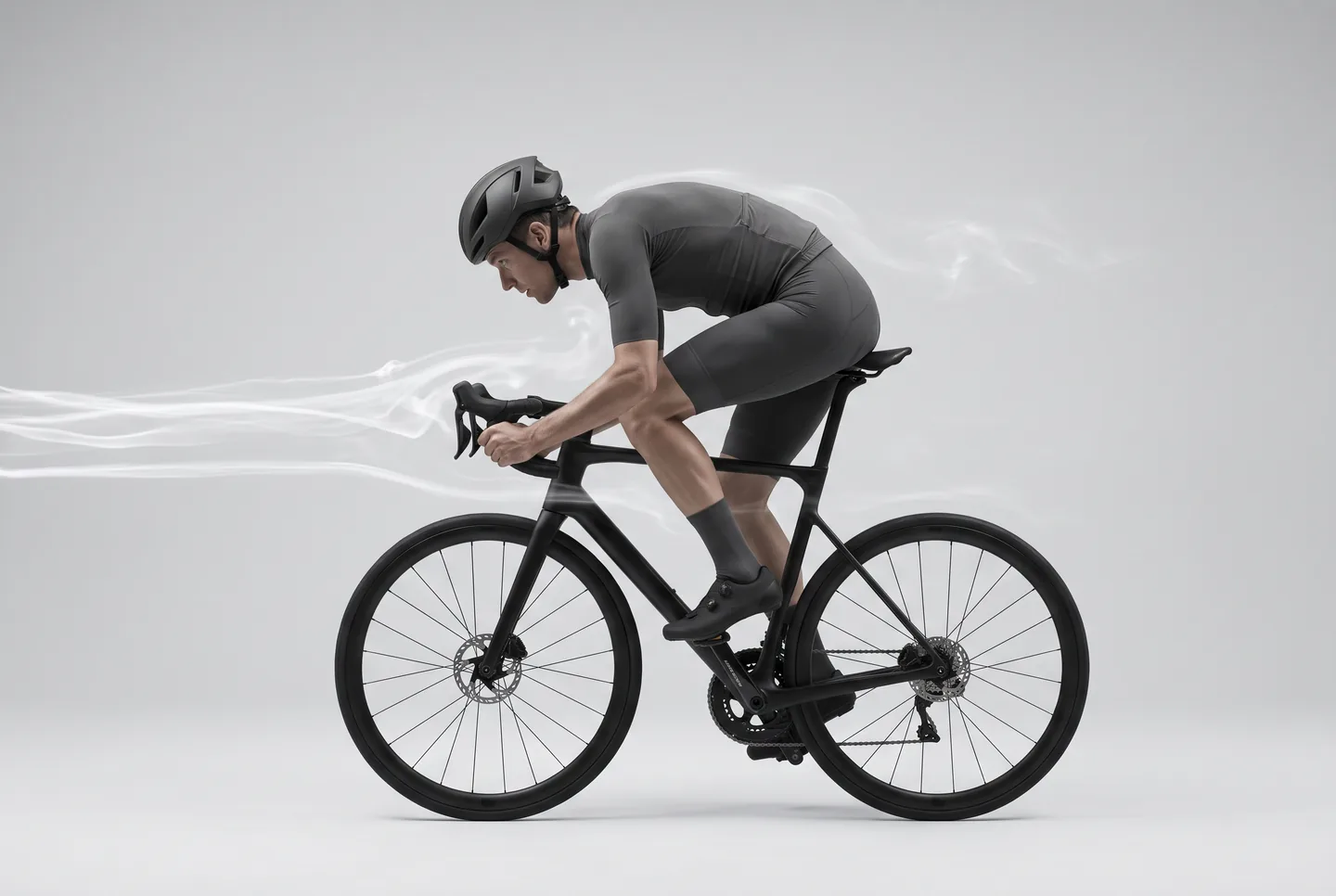
- Get low. A low torso is worth more into a headwind, because the air hitting you is faster. In the calculator’s model, over 20 km (12 mi) at 200 W, going from the medium position to a low torso is worth 57 seconds with no wind, 1'25" into a 10 km/h (6 mph) headwind and 2'08" into a 20 km/h (12 mph) one. We have a guide on riding position.
- Get on a wheel. Behind another rider you push much less air, and that matters even more into a headwind. We have a guide on drafting.
- Pace your effort. When you’re going slowly, every watt buys you more seconds. In the calculator’s model, over the same 40 km (25 mi) in a 10 km/h (6 mph) wind, riding 220 W out and 173 back, for the same 200 W average, is about 25 seconds faster than a steady 200 W. That’s a model calculation, and the gain is small.
Crosswinds aren’t covered here. They change the angle the air hits the bike and rider at, and the numbers depend a lot on the bike and wheels1.
The calculator doesn’t account for wind and does the math as if there were none. On a very windy ride, the real time you gain from aero upgrades can be different.
Sources
We read every source ourselves. They’re all public pages you can read for free. All the numbers in this guide come from the calculator’s model.
- Crouch, Burton, LaBry and Blair, 2017. Scientific review of cycling aerodynamics, in Sports Engineering: the power model, the speed of the air relative to the rider, air resistance with the square of speed, crosswinds and yaw angle. Study (PDF)