GUIDES · WHEELS
Carbon wheels: what rim depth and weight are worth.
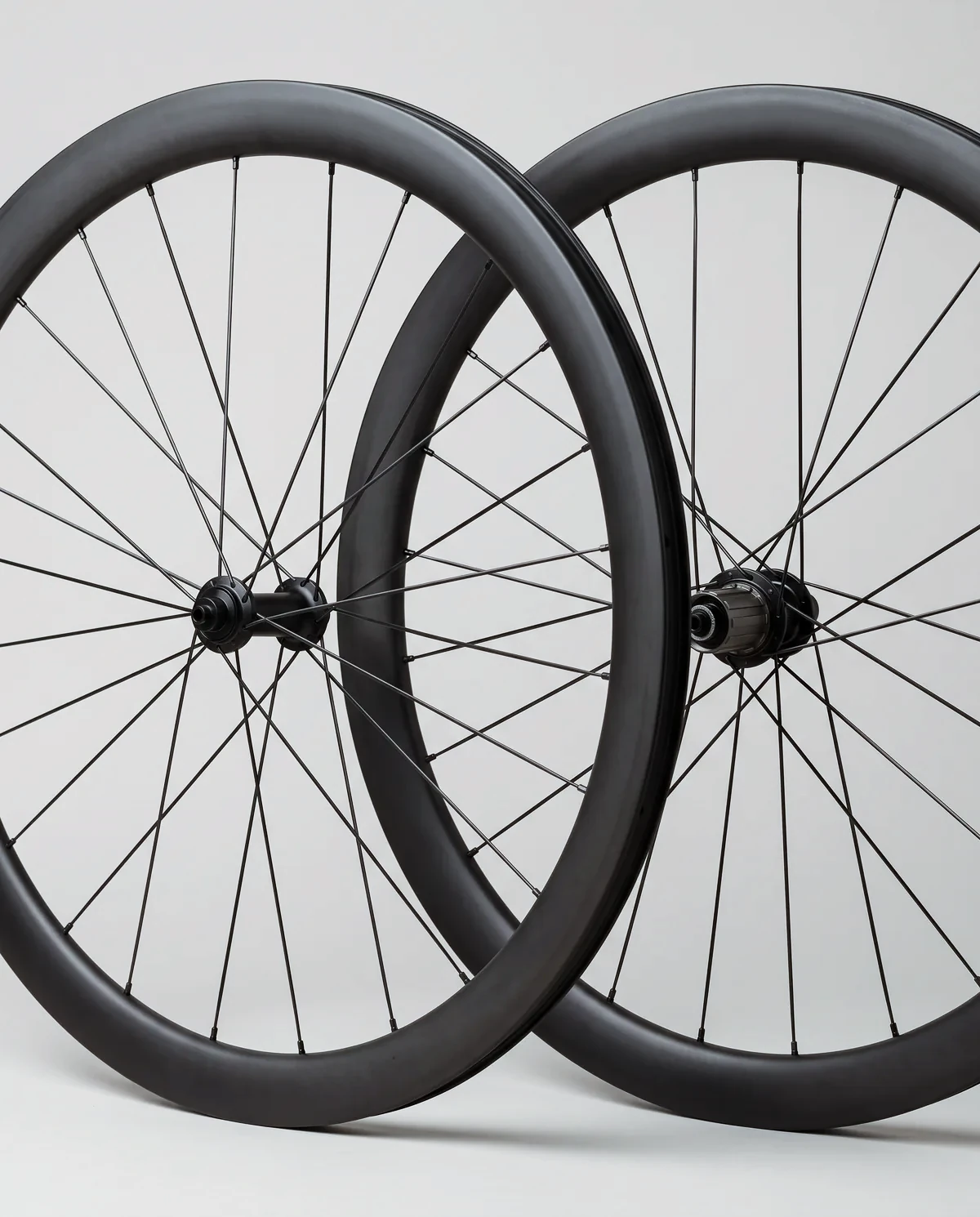
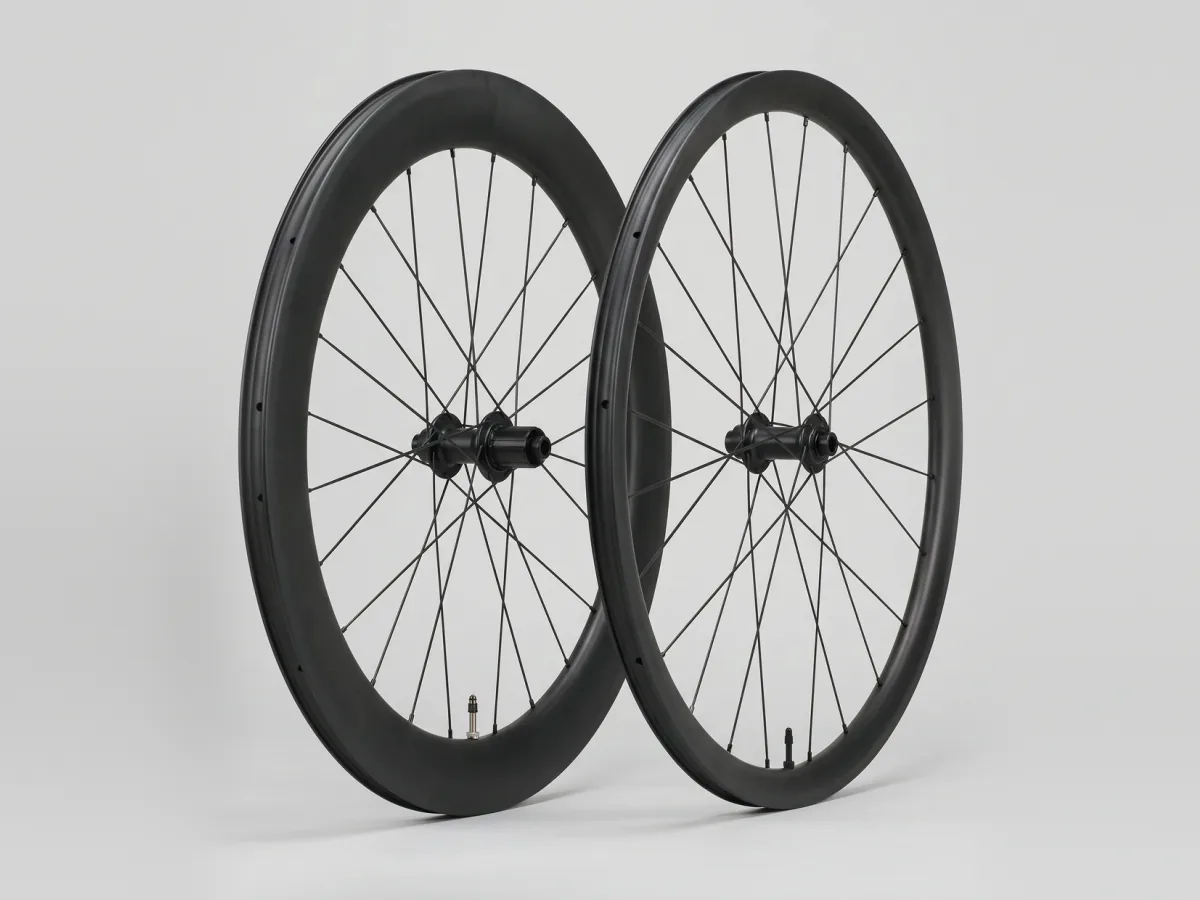
Carbon wheels save you time in two ways. They’re more aero and they weigh less. A deep rim helps on the flats and descents, while weight matters on climbs. In the tests, the difference between mid-range and top-end wheels is small, even though the price gap is big.
5.9 W
What 50 mm wheels saved over the shallow wheels of a 2015 road bike, at 40 km/h (25 mph) with a rider on board. Margin of error: 3.9 W.
−0'45"
What they’re worth on the example gravel ride, 62 km (39 mi) with 780 m (2,560 ft) of climbing, compared with stock aluminum wheels, for about €800.
−0'05"
What top-end wheels add over mid-range ones on the same ride. That’s €1,700 more for about 120 g less.
< 4 W
The gap at 40 km/h (25 mph) between the fastest and slowest of ten pairs of 50 to 65 mm aero wheels in the wind tunnel.
Aero vs weight
A wheel saves you time in two ways. A deep rim is more aero, and a lighter wheel is less to carry.
Which one matters more depends on where you ride. You feel weight mostly on climbs1. Air matters more the faster you go, because the watts needed to overcome it grow with the cube of speed2. That’s why a deep rim pays off on the flats and descents but does little on climbs.
There’s a guide on deep or light wheels on climbs, with the numbers grade by grade.
On the calculator’s example gravel ride, at an average of 23.5 km/h (15 mph), 1 kg less is worth about 45 seconds, and 0.001 less CdA (air resistance) about 4. On the road ride, at 28 km/h (17 mph), 1 kg is worth 35 seconds and 0.001 of CdA about 6.4. On the MTB ride, at 14 km/h (9 mph), 1 kg is worth 73 seconds and 0.001 of CdA just one.
What the wind tunnel tests say
The most complete independent measurements come from Cyclingnews, at the Silverstone wind tunnel in England. For the 2024 test, the magazine paid the same rate as any other customer. The 2024 article includes paid product placement from the test bike’s maker and the tire maker, but not from any of the wheel brands tested2.
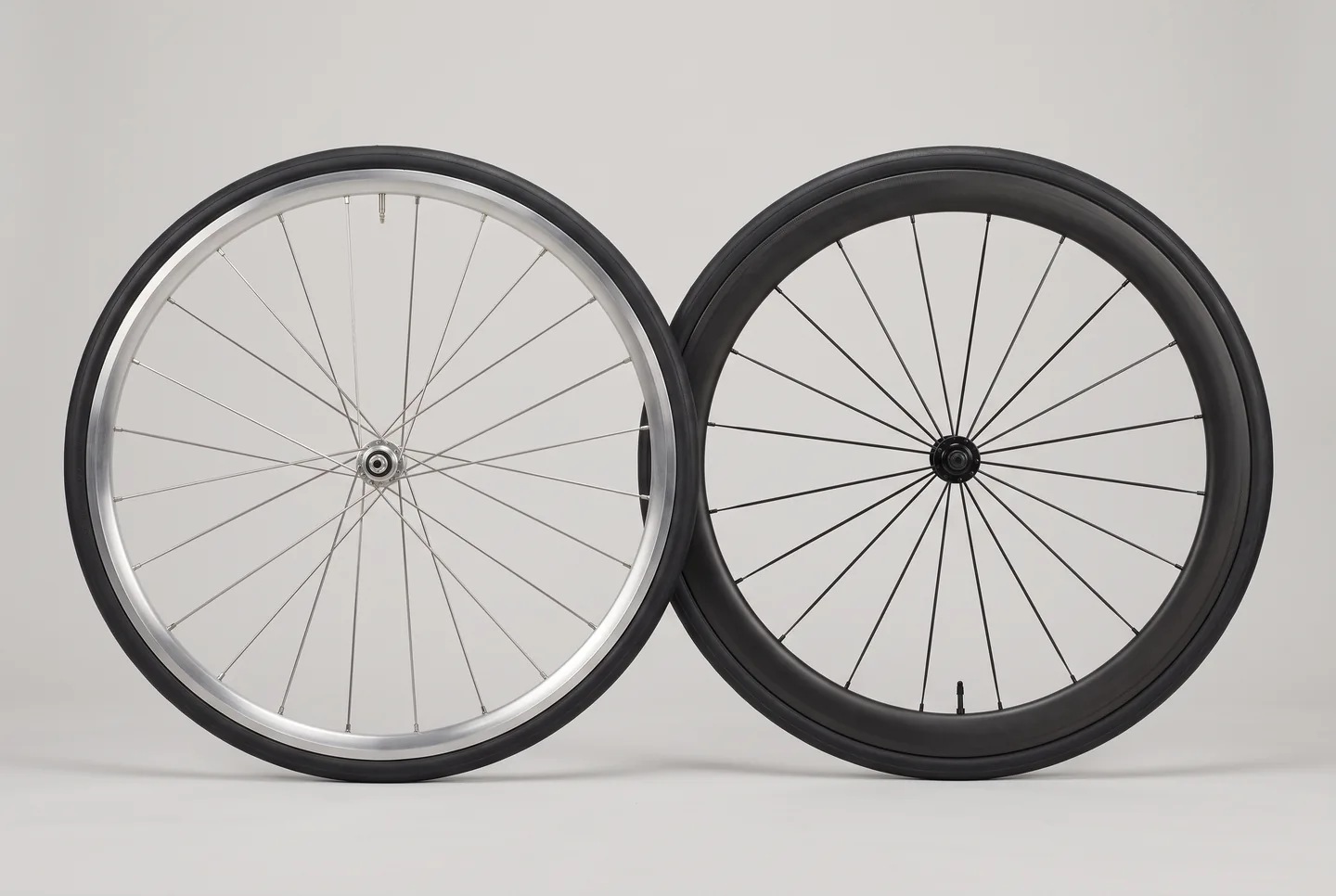
With a rider. Cyclingnews swapped the shallow wheels on a 2015 road bike for 50 mm wheels. At 40 km/h (25 mph) with a rider on board, CdA dropped by 0.0062. The magazine says that’s 5.89 W less, about 25 seconds over 40 km (25 mi) at 250 W. With the calculation we use on this site, 0.0062 at 40 km/h (25 mph) comes to about 5 W. The margin of error was 3.91 W. The deep wheels were slower with the wind almost head-on and faster with wind from the side, when the rim works like a sail. The magazine thinks the gain is probably smaller out on the road, because strong crosswinds are less common3.
Without a rider. In 2024 Cyclingnews tested 18 pairs of aero wheels, 48 to 67 mm deep, on the same bike with no rider, against 24 mm aluminum wheels weighing just over 1.7 kg. At 40 km/h (25 mph) they saved 6.81 to 10.51 W, with a margin of error of ±0.76 W2. Without a rider the absolute watts aren’t realistic, and what matters is how the wheels compare with each other2. That’s why we don’t add them to the results from the test with a rider.
WATTS SAVED COMPARED WITH 24 MM ALUMINUM WHEELS
The slowest of the 18 aero wheels, at each speedThe fastest of the 18 aero wheels, at each speed
30 km/h (19 mph)
40 km/h (25 mph)
50 km/h (31 mph)
Aero wheels against each other. In 2022, across ten pairs from 50 to 65 mm, the fastest and slowest were less than 4 W apart at 40 km/h (25 mph) and less than 2 W apart at 30 km/h (19 mph)4. In 2024, first and last of the 18 were 3.7 W apart at 40 km/h (25 mph)2. The big jump is from a shallow rim to an aero one. Between two aero rims there are only a few watts left.
Rotating weight
You often hear that a gram on the wheel counts double. That’s only partly true. Getting a wheel up to speed takes energy to move it forward and to spin it. If all the weight were at the rim, each gram would cost twice as much as a gram on the frame, and in reality it’s a bit less. On a steady climb, though, only the weight counts, not where it sits5.
So inertia only matters when your speed changes6, and even then not by much. In a 5-second sprint on the flat from 41 to 49 km/h (25 to 30 mph), averaging 766 W, adding 400 g to the rims, all of it at the outer edge, raised the extra force needed at the pedals by just 1%7. In a model of a loop that finishes at the same elevation it started, wheel inertia took 0.5% of the power and air drag on the wheels 8%6. Both analyses agree that aero is what matters most in a wheel6,7.
Shallow, mid or deep
BikeRadar calls a 35 to 50 mm rim mid-depth and anything over 50 mm deep-section, with 35 mm as the usual starting point for aero1. In the calculator, shallow means up to 30 mm, mid 31 to 50 mm, and deep over 50 mm.
A deeper rim is more aero, but it takes more carbon and weighs more1,8. For most riders 40 to 65 mm works well, and 30 to 40 mm for rides with lots of climbing. Wheels over 80 mm may not suit open roads in all conditions8.
Crosswinds. Deep wheels gain the most in crosswinds, and at 40 km/h (25 mph) many started acting like a sail from 10 degrees up2. They also give gusts more surface to push on, and a gust can knock the wheel off line. Lighter riders have a harder time, because they have less mass to hold the bike steady8. In strong crosswinds, a deep rim can be a handful1.
Mid-range vs top-end
In the calculator, mid-range wheels cost €800 and top-end ones €3,800 on the road and €2,500 on gravel (€1,150 and €2,250 on the MTB). In online stores the priciest top-end wheels go over €4,000. Here’s what the extra money gets you.
A little aero. Cyclingnews calls the one to four extra watts from pricier wheels terrible value4. In 2024 it found a slight link between price and speed, but not a clear one. The two fastest wheels were also the lightest and most expensive, over £3,000. But a £999 pair came fifth at 40 km/h (25 mph), just over 1 W behind the winner. That’s about £111 per watt saved, compared with about £300 for the fastest2.
Some weight. BikeRadar says a well-priced pair weighs 1,500 to 1,800 g, and an ultralight climbing pair, if money is no object, 900 to 1,300 g1.
In the calculator, top-end wheels are an extra step that always comes after the mid-range. They weigh about 120 g less, between 50 and 170 g. In the Cyclingnews test, the seven pairs priced from £2,960 up weighed 1,280 to 1,504 g2. For aero we count them as equal, because the differences between wheels at different prices are small and price doesn’t guarantee them2,4. The entry is labeled claimed, because the weights come from the manufacturers’ spec sheets.
Gravel and MTB
Gravel. In 2026 Cyclingnews tested eight pairs of gravel wheels with 55 mm tires at 35 km/h (22 mph), with no rider. Generally the deeper the rim, the faster the wheel, but the aero wheels were only about 5 W faster than the two built for comfort. Two pairs gave up about 1 W to the most aero ones while weighing about 350 g less. The magazine thinks weight should matter more on gravel than on the road. The test bike came from the same group that makes the winning wheels, and the magazine doesn’t rule out that this helped9. The calculator uses the same values for gravel as for road. For aero that’s an estimate, because the test with a rider was done on a road bike.
MTB. Here we only count weight, since on the example MTB ride 0.001 of CdA is worth one second. Singletracks’ roundup of 16 pairs of carbon MTB wheels under $1,500 also focuses on weight, strength and ride feel, with nothing about aero. They weigh 1,495 to 1,982 g, and the XC ones 1,495 to 1,630 g10. A budget trail wheelset that’s common on stock bikes weighs 1,887 to 2,006 g in 29", according to the product listing11.
What they’re worth on your ride
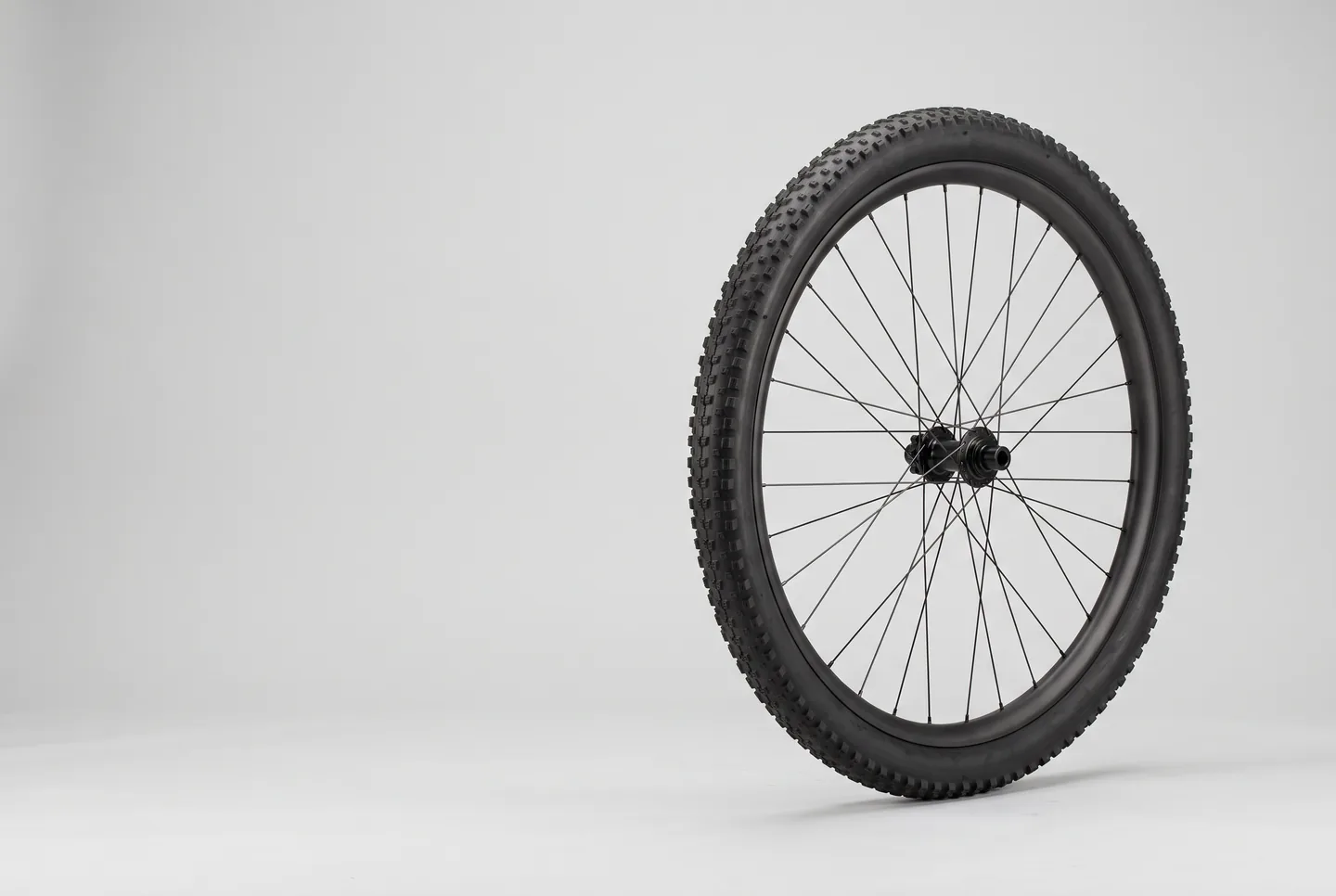
In the calculator, mid-range carbon wheels gain you time through both weight and aero. In step 1 you enter your current wheels: material, pair weight and rim depth.
Weight. We take your wheels’ weight minus the new ones. The new pair weighs 1,525 g on road and gravel, between 1,650 and 1,450 g, and 1,650 g on the MTB, between 1,800 and 1,500 g1,10,12. That’s the wheels alone, without tires, cassette or rotors. If you leave it blank, for aluminum we assume stock wheels of 1,900 g, or 1,950 g on the MTB1,11. For carbon we only count the depth, and on the MTB the wheels stay off the ladder. Wheel weight counts like any other weight, with nothing extra for rotation6,7. If you enter the wheels yourself with “Add your own component” and upload a ride file, we also count the energy needed to spin them up in the accelerations you actually make.
Aero. It depends on your current rim depth. From a shallow rim, CdA drops by 0.006, between 0.0015 and 0.011. That’s the test with a rider, including its margin of error3. From a mid-depth rim it drops by 0.0015, between 0 and 0.005. Aero wheels from 50 to 65 mm were less than 4 W apart at 40 km/h (25 mph)4, and one manufacturer says going from a 34 mm carbon rim to a 54-58 mm one saves 5.9 W at 45 km/h (28 mph)13. From a deep rim there’s no gain, and if your deep wheels are already carbon, the upgrade comes off the ladder. From shallow carbon wheels we count 0.004, between 0.002 and 0.006. There’s no independent test for that, so it’s an estimate. On the MTB we don’t count aero.
Top-end wheels are worth what they add over the mid-range and cost the price difference. If mid-range wheels wouldn’t gain you anything, for example because yours are already light, we count the top-end ones in full, at full price. If you’re on aluminum wheels, you’ll also see, below your plan, how mid-range wheels compare with it.
On the example gravel ride, 62 km (39 mi) with 780 m (2,560 ft) of climbing, mid-range wheels are worth about 45" over stock aluminum ones, between 18" and 1'10". That’s 17 seconds from weight and 26 from aero. Top-end wheels add about 5" more, between 2" and 8". On the ladder, mid-range wheels are the eleventh step and top-end ones the last. The €300 plan gains about 9 times as much as mid-range wheels, for 24% of the cost. On the example MTB ride, mid-range wheels are worth about 22" and top-end ones another 15". On your ride it could be more or less, depending on your wheels, your speed and how much you climb.
What it costs. We count €800 a pair on road and gravel and €1,150 on the MTB, an average between sale and full prices. For top-end wheels we count €3,800 on the road, €2,500 on gravel and €2,250 on the MTB. Top-end road wheels cost about €2,900 to €4,200, and gravel ones about €1,800 to €2,900. In online stores, mid-range carbon wheels go from about €500 on sale to about €1,000 at full price.
NUMBERS FROM THE CALCULATOR
On the example ride for each discipline, with a 74 kg rider. Each upgrade is counted on its own, without the others. The “on top of” rows only count what they add, and only cost the difference.
| Seconds · cost · rank | ROAD | GRAVEL | MTB |
|---|---|---|---|
| Carbon wheels, mid-range | −0'50"€80011th | −0'45"€80010th | −0'20"€1,15012th |
| Top-end carbon wheelson top of the mid-range wheels | −0'04"+€3,00027th | −0'05"+€1,70026th | −0'15"+€1,10018th |
Updated from the calculator on NOVEMBER 18, 2026.
How to choose
- Start with where you ride. For most riders, 40 to 65 mm. If you climb a lot, light wheels from 30 to 40 mm8. On gravel and MTB, look at weight first9,10.
- Think about wind and your own weight. If you’re light or often ride in crosswinds, don’t go too deep1,8.
- Compare the real weight of the pair, without tires, cassette or rotors, against your current wheels. A budget pair weighs 1,900 g or more1.
- Check the dimensions. For internal width, under 14 mm is very narrow, 20 mm and up is wide, and anything in between works for 25 mm tires. With a hookless rim, finding compatible tubeless tires can be tricky, and we have a tubeless guide on that too. Spoke count and build have to suit your weight1.
- Make sure they’ll fit. The freehub body has to match your cassette, the hubs and axles your frame and fork, and the rotor mount your rotors. With rim brakes, carbon rims brake worse, especially in the wet, and need specific pads. On a hookless rim, only run tires approved by the rim maker1.
- For aero, go by the tests, not the price. Results only hold for the day they were tested, and a different method can change them. Don’t forget about warranty, service and maintenance either2.
When it’s not worth it
If you want seconds on a small budget. In the test with a rider, the 50 mm wheels cost about £133 per watt saved3. An aero helmet costs just over £20 per watt and a pair of top tires just under £82. On the example gravel ride, ten better-value steps come before the wheels.
If you already have deep-section carbon wheels, there’s nothing to gain on aero, and the calculator takes them off the ladder. With mid-depth rims the gain is small4.
If you’re light and ride somewhere windy, a deep rim can be hard to handle1,8.
If your MTB wheels are already light. Only weight counts. On the example MTB ride, going from 1,700 g wheels to mid-range ones is worth 4 seconds.
If you want top-end wheels just for speed. On the example gravel ride they give you 5 seconds more than mid-range wheels, for €1,700 more. New wheels can be lighter and wider and ride better, and that’s a fine reason to buy them. If aero is your only reason, Cyclingnews says to think twice3.
Sources
We read every source ourselves. They’re all public pages you can read for free. Prices are approximate, from online stores in November 2026. We don’t link to the stores, because the site doesn’t tell you where to buy.
- BikeRadar, 2026. Guide to road wheels, with 28 pairs tested: typical weights, depths, crosswinds, rim width, spokes. Article
- Cyclingnews, 2024. 18 pairs of aero wheels in the Silverstone wind tunnel, without a rider, at 30, 40 and 50 km/h (19, 25 and 31 mph), against 24 mm aluminum wheels. With weights, prices, margin of error and cost per watt. Includes paid product placement from the maker of the test bike and from the tire maker. Article
- Cyclingnews, 2024. 50 mm wheels against the low-profile wheels of a 2015 road bike, in the tunnel with the rider on the bike, at 40 km/h (25 mph) and with wind from different directions. Article
- Cyclingnews, 2022. Ten pairs of 50 to 65 mm aero wheels in the tunnel, without a rider, at 45 km/h (28 mph), with the results scaled to 30 and 40 km/h (19 and 25 mph). Article
- University of Illinois, 2007. The physics department’s Q&A service on why wheel weight matters more when you accelerate, but not on climbs. Answer
- BikeGremlin, 2022. Republishes a Bike Tech Review analysis of how much power goes into air, weight and wheel inertia. Article
- Slowtwitch, 2011. Tom Anhalt calculates how much wheel inertia matters in a sprint on the flat, starting from a race file. Article
- Cyclingnews, 2020. Rim depth, aero, weight, crosswinds, and which depth suits which riding. Article
- Cyclingnews, 2026. Eight pairs of gravel wheels in the tunnel, with 55 mm tires, at 35 km/h (22 mph), without a rider. The test bike is from the same group that makes the winning wheels, and the magazine says so. Article
- Singletracks, 2024 (updated in 2025). 16 pairs of carbon MTB wheels under $1,500: weights, prices, use, why carbon. Article
- ENDURO Mountainbike Magazine, 2018. Weights claimed by the maker for budget trail and enduro MTB wheels, 27.5" and 29", widely used on stock bikes. Article
- bici.PRO, 2025. Two pairs of carbon wheels, 35 and 50 mm: weights and list prices claimed by the maker, 1,490 and 1,560 g, €799.99 and €899.99. Article
- road.cc, 2025. Article sponsored by a wheel maker, with its tunnel data: 34 mm carbon wheels against 54-58 mm wheels, at 45 km/h (28 mph). Article