GUIDES · AERODYNAMICS
Aero handlebar and bottle: what the aero parts of your bike are worth.
Most of the air you push is moved by your body. The bike accounts for about a fifth of the drag, and an aero handlebar and bottle trim that fifth. It’s a few watts, and they matter when you’re going fast. There’s an independent test for the bottle, but for the handlebar it’s almost all manufacturer data. An integrated bar also takes some care to choose and install.
4–5 W
What manufacturers usually claim for an aero handlebar over a round one. We found no public independent tests.
−0'15"
What the aero handlebar is worth on the example gravel ride, 62 km (39 mi) with 780 m (2,560 ft) of climbing, for about €600.
3.4 W
What a round bottle on the down tube of an aero bike cost at 45 km/h (28 mph). An aero bottle in the same spot cost almost nothing.
80%
The rider’s share of the air resistance. Riding on the hoods instead of the tops was worth 19 W at 35 km/h (22 mph).
Where the watts go
On flat roads, air accounts for more than 90% of the resistance you ride against, and the faster you go, the more it matters1. About 80% of that comes from the rider and about 20% from the bike1. BikeRadar puts the rider at about 75% and CyclingAbout at 75–80%2,3.
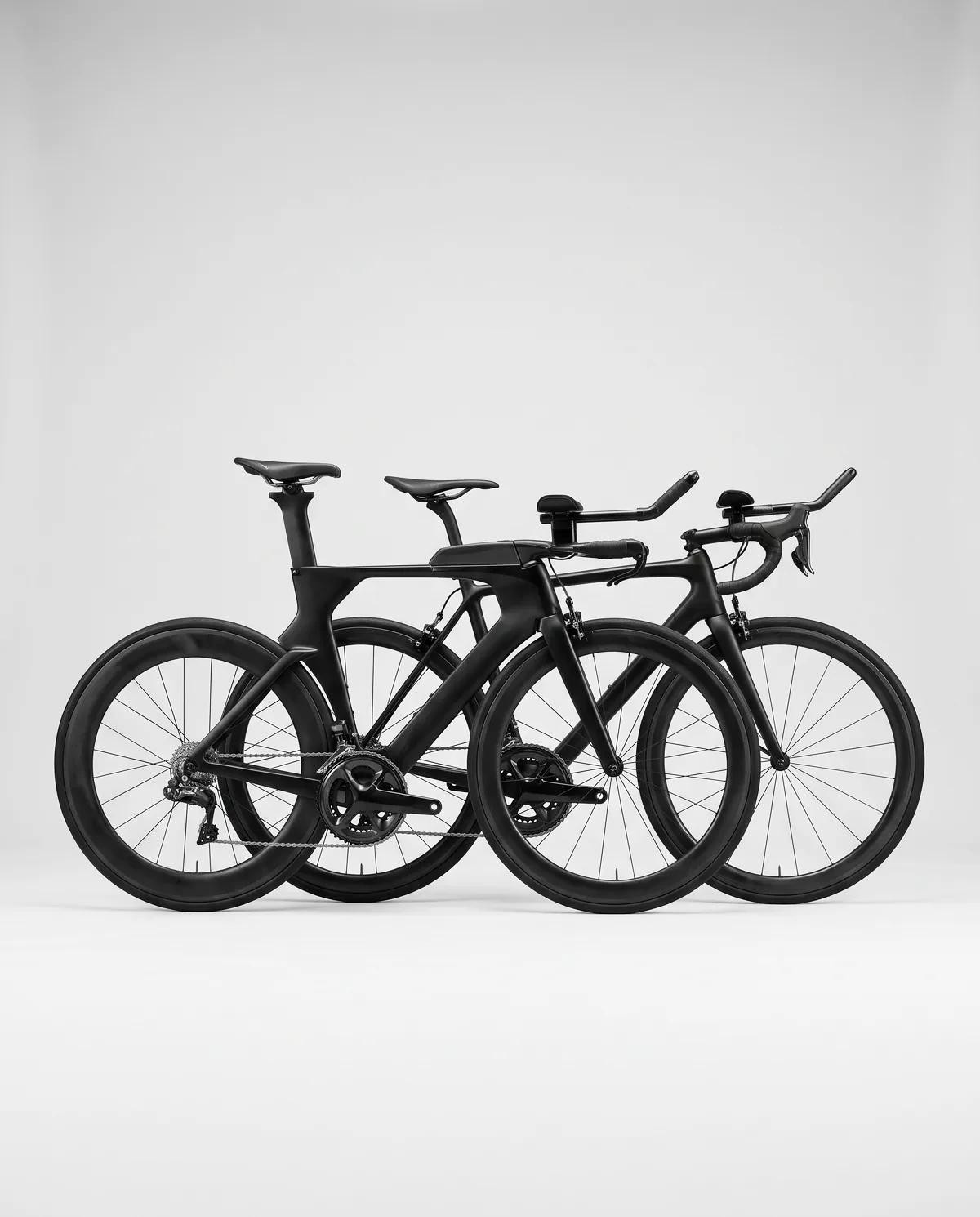
The bike’s 20% isn’t small. In a German wind tunnel at 45 km/h (28 mph), a bike on its own took 70 to 100 W2. The handlebar, stem, cables and bottles are part of that.
What an aero part is worth depends mostly on speed, because the watts needed to push the air go up very fast. 1 W saved at 45 km/h (28 mph) is worth about 0.47 W at 35 km/h (22 mph) and 0.17 W at 25 km/h (16 mph)4. Whenever you see a number in watts, check what speed it was measured at.
What the tests say about the handlebar
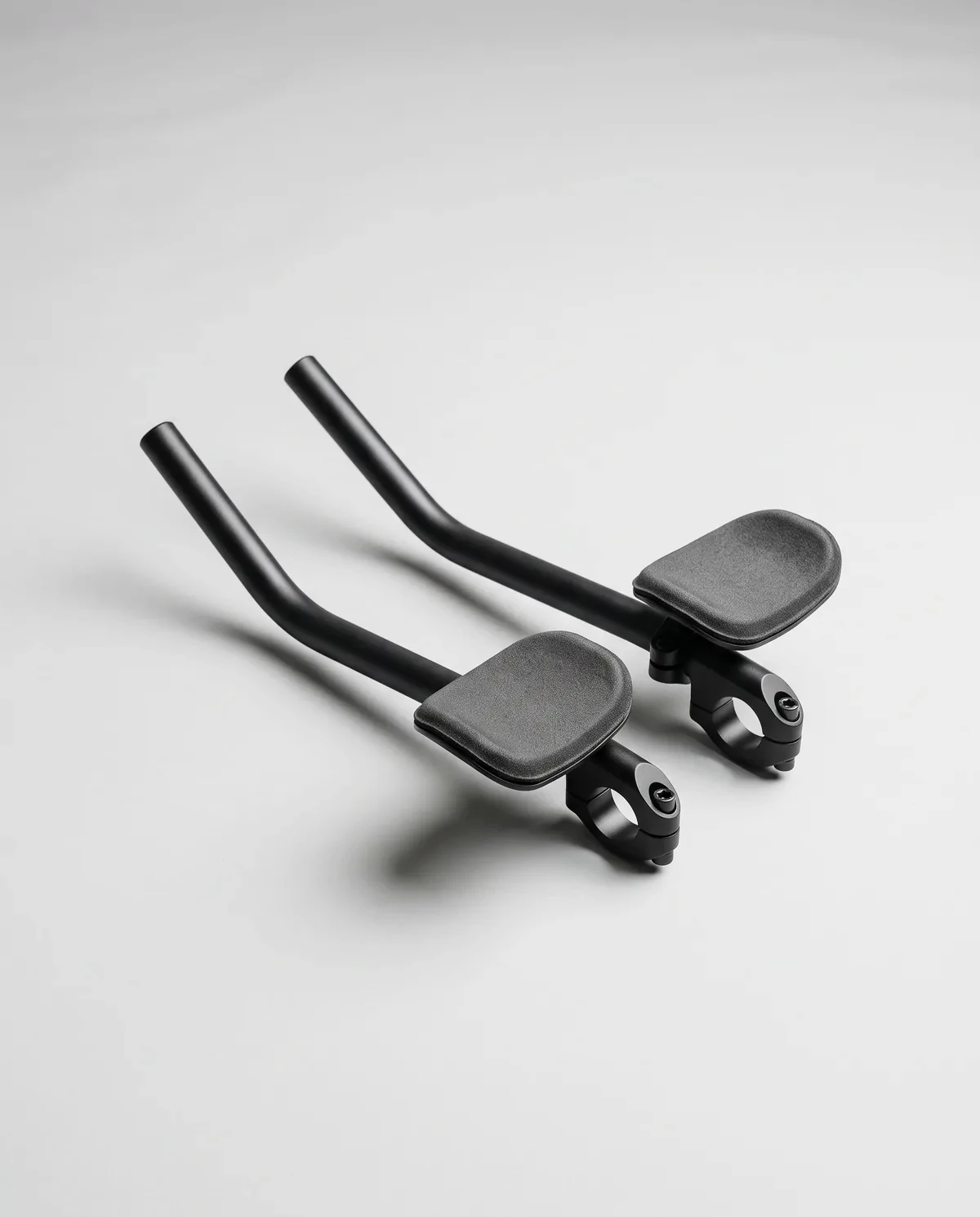
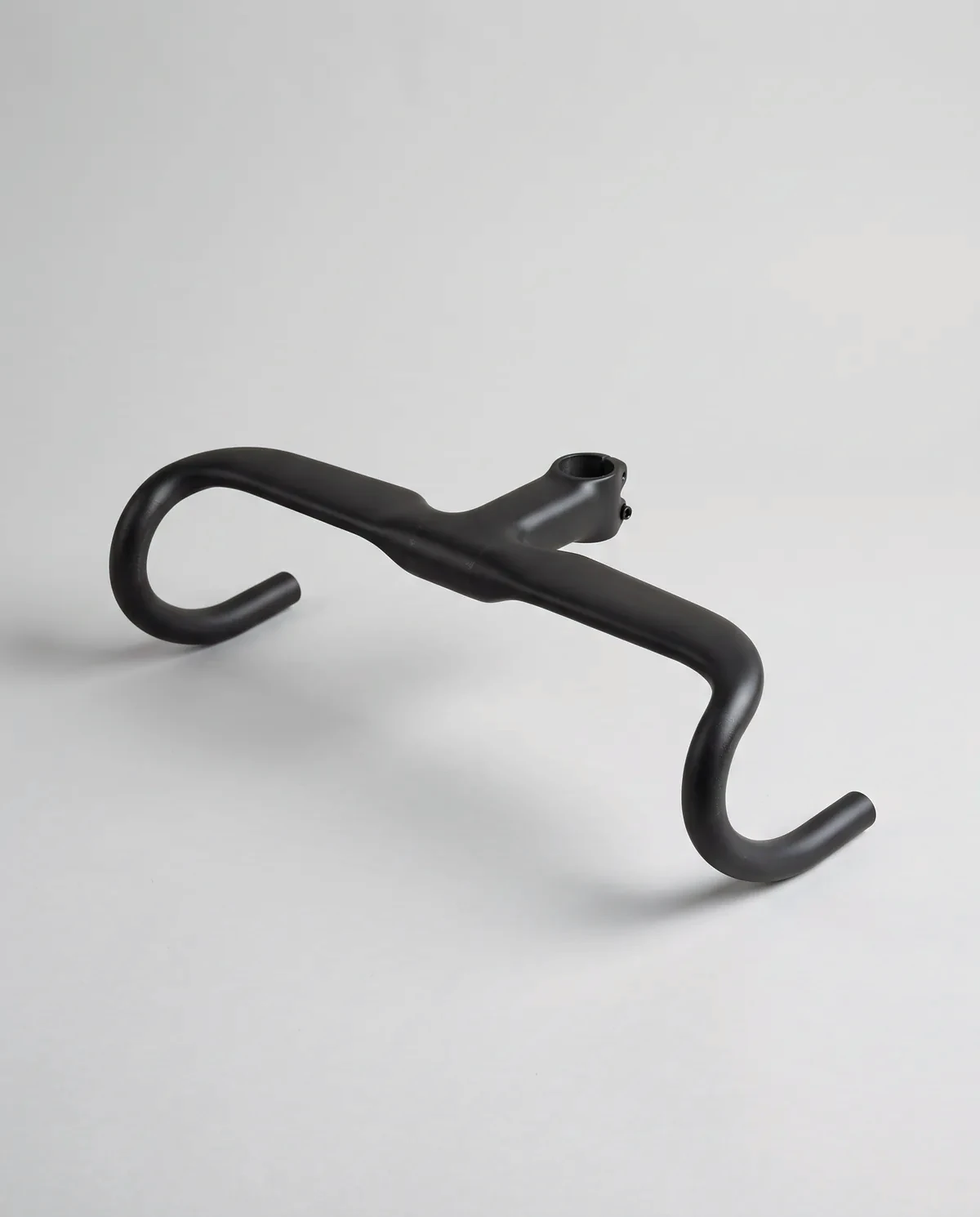
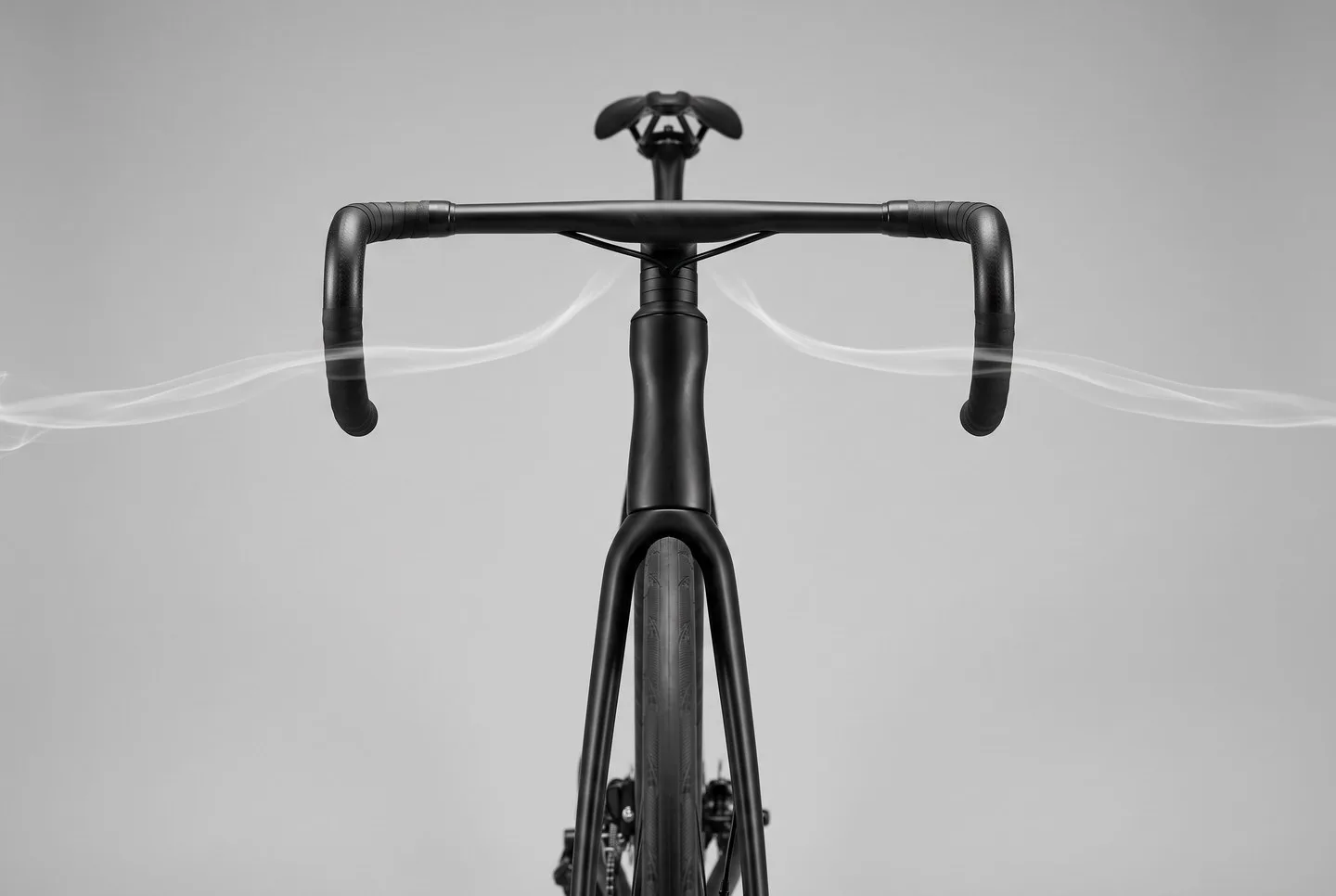
An aero handlebar has flat tops with a teardrop or truncated-airfoil profile2. It can also be integrated, with bar and stem in one piece and the cables running inside all the way into the frame5,6.
Manufacturers. Many claim 4–5 W less than a round bar, without saying at what speed2. Some claim more. One talks about 20 seconds without giving any conditions7. Another claims 8–14 W at 40–45 km/h (25–28 mph) over a separate bar and stem with external cables. It refers to other tests in general terms but doesn’t say which ones8.
A test by a seller. The UK distributor of a handlebar brand tested one of its aero bars against one of its round bars in the Silverstone wind tunnel, with the rider in the same position. In the drops, at the same width, the aero bar was worth 8–10 W at 40 km/h (25 mph). On the hoods it was worth more, but the aero bar was also 3 cm narrower there9.
Independent tests. We couldn’t find a public aero-versus-round comparison from anyone who doesn’t sell handlebars. TOUR, the German magazine that tests bikes in the wind tunnel at 45 km/h (28 mph)3, says a fully integrated bar saves 2–3 W at most at 45 km/h (28 mph). It says the figure comes from the wind tunnel, but not from which test or compared with what5.
Bar tape. Aero bars are designed to run without tape on the tops. An aerodynamics company that also makes wheels ran a test for BikeRadar at 45 km/h (28 mph), averaged over crosswind angles from −20° to +20°. Compared with the tape as it came, taking it off the tops saved 0.7 W, and wrapping it almost up to the stem cost 0.7 W more2. If you rest your forearms on the tops, though, a bare aero bar can be dangerous2.
Cables. Aerocoach calculates that a 130 mm length of exposed brake cable, like the one between the bar and the front brake, costs about 0.4 W at 45 km/h (28 mph). Four lengths like that come to about 1.6 W, which drops to about 0.5 W at 30 km/h (19 mph). Hiding the cables on a high-end bike never gained Aerocoach more than 2 W on the track or in the tunnel, and sometimes gained nothing4. One bike maker claims 6 seconds over 40 km (25 mi) at 45 km/h (28 mph) from hiding two brake cables4.
Width and hand position
At the front of the bike, the biggest savings come from your position. BikeRadar measured a rider pedaling in the Silverstone wind tunnel at 35 km/h (22 mph). Riding on the hoods saved 19.26 W over riding on the tops. The “aero hoods” position you see in the pro peloton saved another 22.38 W over normal hands on the hoods10.
Width matters too. In the same test, going from a 40 cm bar to a 36 cm one with the hoods angled slightly in saved 2.43 W, using a bar that costs about €24. For riders with broad shoulders it can be too narrow on long rides, though10. In another test with a single rider on the hoods, a bar 30 cm wide at the hoods and 37 cm at the drops saved 17.6 W at 35 km/h (22 mph) over a 36 cm bar11. In TOUR’s aero bike tests, narrower bars usually come out ahead as well3.
So sort out your position and bar width before you think about an aero bar. An integrated bar has almost no adjustment, so you need to settle on the size before you buy.
What the tests say about the bottle
Aerocoach does aero testing and sells aero wheels and handlebars, but not bottles. It tested bottles on an aero road bike, in the wind tunnel and on the track, comparing a long, narrow aero bottle with a round 650 ml one, both mounted low on the down tube12.
At 45 km/h (28 mph), the round bottle cost 3.4 W compared with no bottle. The aero bottle measured the same as no bottle, 0.1 W better, which is within the measurement error. With two bottles, on the down tube and seat tube, the round ones cost 12.9 W and the aero ones 4.8 W. At 35 km/h (22 mph) the differences are roughly halved12.
EXTRA WATTS WITH BOTTLES, AT 45 KM/H (28 MPH)
Round bottlesAero bottles
One bottle
Two bottles
These numbers are from one frame. With a different frame, or even a different front wheel, they change. Aerocoach says the long, narrow bottle works best on an aero frame designed for it12. One bike maker claims 1.8 W at 35 km/h (22 mph) for its aero bottle and cage over round bottles and cages. That’s an average over several wind angles, measured on one of its own bikes, and it doesn’t say whether it was with one bottle or two13.
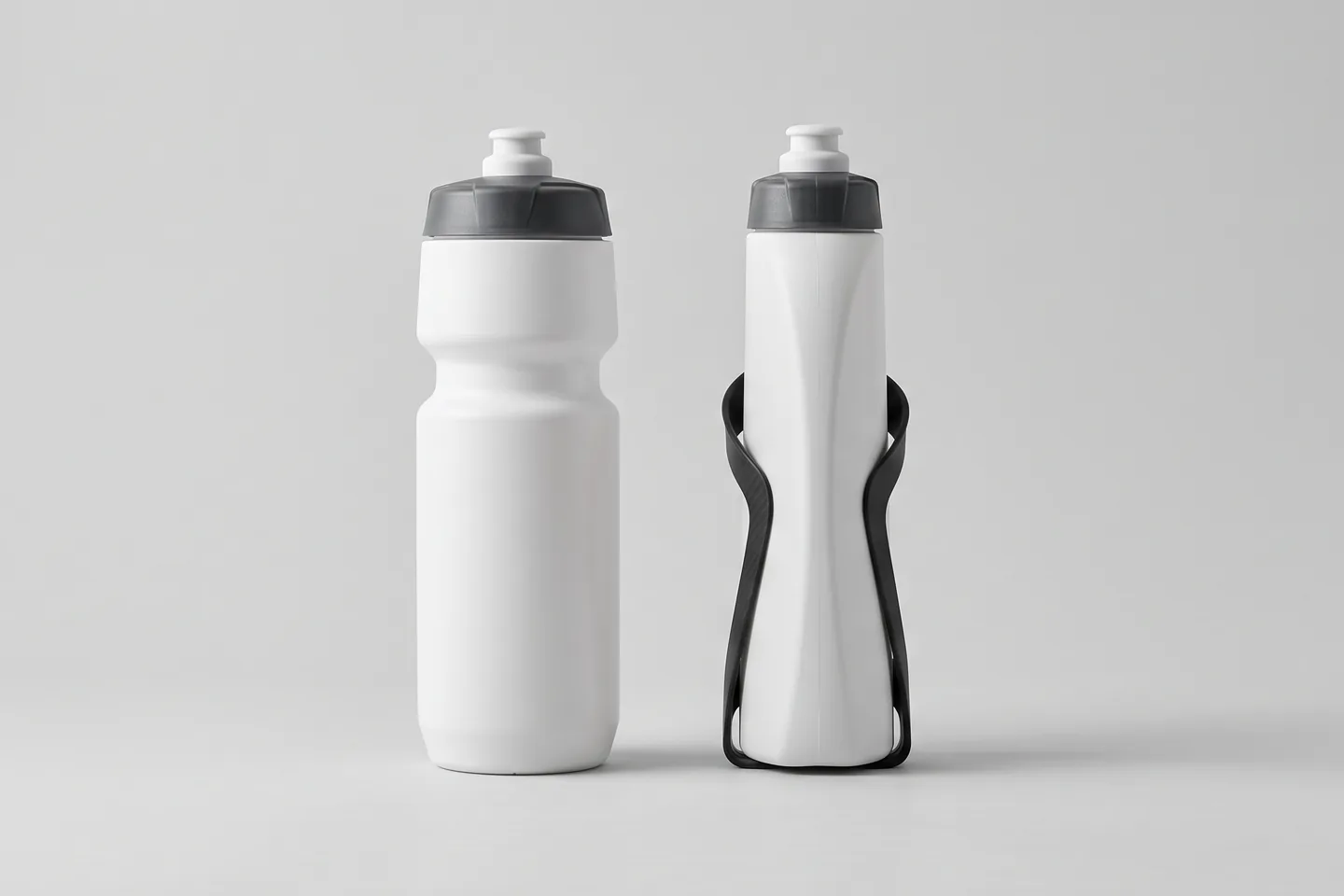
Where to mount it. In the road test the bottle sat low on the down tube12. The bike maker also mounts its cages low, close to the bottom bracket13. On a time trial bike at 40 km/h (25 mph), Aerocoach measured a round 500 ml bottle at 5.0 W on the down tube, 3.6 W on the seat tube and 0.7 W behind the saddle14. That was a TT bike, and we don’t know if a road bike behaves the same way.
A second bottle costs a lot of watts, round or aero. If the ride is short and one bottle is enough, just take one12.
What they’re worth on your ride
The handlebar. In the calculator, an integrated aero bar takes 0.003 m² off your CdA, the number that describes how much air resistance you create. The range is 0.001 to 0.010. At 45 km/h (28 mph), 0.003 is about 3.5 W. That falls between TOUR’s 2–3 W at most, the only source that doesn’t sell handlebars5, and the 4–5 W manufacturers usually claim, assuming they measured at 45 km/h (28 mph)2. At 40 km/h (25 mph), 0.010 is about 8 W, which is what the distributor measured in the drops9. At 45 km/h (28 mph), 0.001 is about 1.2 W. The calculator still labels it a claimed figure. For gravel we use the same values as road, because we found no tests of gravel handlebars.
On the example gravel ride, 62 km (39 mi) with 780 m (2,560 ft) of climbing, the bar is worth about 0'15", between 0'04" and 0'45". On the longer, faster example road ride, 80 km (50 mi) with 900 m (2,950 ft) of climbing, it’s worth about 0'20", between 0'06" and 1'00".
The bottle. This one only counts on the road. In the calculator it takes 0.002 m² off your CdA, with a range of 0 to 0.0033. At 45 km/h (28 mph), 0.002 is about 2.3 W. We only count one bottle. Aerocoach’s 3.4 W at 45 km/h (28 mph) works out to 0.002912, and the bike maker’s 1.8 W at 35 km/h (22 mph) works out to 0.003313. The gain changes with the frame12, and we found no measurements on non-aero frames, so the low value is zero. On the example road ride it’s worth about 0'15", between 0" and 0'20".
On your ride they could be worth more or less, depending on how much you pedal and how fast you go. If you tell the calculator you spend part of the ride drafting, we only count seconds on the part you ride alone.
What it costs. The calculator counts €600 for an integrated aero bar. Online it costs about €650 to €750 at full price and about €470 to €630 on sale. For the aero bottle and cage we count €70. Kits cost from about €40 to about €100, less on sale. If a shop installs the bar, add labor.
NUMBERS FROM THE CALCULATOR
On the example ride for each discipline, with a 74 kg rider. Each upgrade is counted on its own, without the others.
| Seconds · cost · rank | ROAD | GRAVEL | MTB |
|---|---|---|---|
| Integrated aero handlebar | −0'20"€60012th | −0'15"€60015th | — |
| Aero bottle and cage | −0'15"€706th | — | — |
—: not counted in that discipline. Updated from the calculator on NOVEMBER 18, 2026.
How to choose and how to install
- Get the size right first. Decide on width, stem length, reach and drop before you buy. A one-piece bar can’t be rotated, and the only way to change reach is the stem length. Narrow widths often only come with short stems. Bike fitters recommend getting a fit before you buy15.
- Check compatibility. The frame needs internal cable routing, and some integrated bars need a matching fork, steerer and headset. Mechanical shifting or rim brakes can make it more complicated6. Even on the same bike model, bars from different generations may not be interchangeable15. Check the steerer and bar diameters with the manufacturer, because incompatible parts are dangerous16.
- Use a torque wrench. Set the headset preload with the top cap bolt first, then tighten the steerer bolts. Always go by the manufacturer’s torque specs. Stems are usually 4–6 Nm, but the manufacturer’s number is the one that counts. With a carbon steerer, the steerer has to run through the whole stem with a spacer on top and sit about 3 mm below the top of the spacer. If it’s flush, you can’t adjust the headset. If bar and stem are separate, use carbon assembly paste between the carbon bar and the stem16.
- Think about future maintenance. With every cable inside, dropping the bar or cutting the steerer can mean shortening and bleeding the brake hoses5,15. Replacing headset bearings on a regular bike takes about €15 in parts and fifteen minutes. With internal cables, a mechanic often needs two hours or more, and a shop charges €200–4005. With mechanical shifting, tight cable bends add friction and slow down your shifts6.
- Tape the drops only. Tape on the tops of an aero bar costs watts, so leave them bare unless you rest your forearms there2.
- Match the bottle and cage. One maker’s aero bottle doesn’t fit a regular cage, but its aero cage also takes round bottles. Check before you buy. Bottle cage bolts are small, and that maker specifies 2 Nm at most on one frame and 2.3–2.9 Nm on most of its bikes13.
If you’re not sure, have a shop do it. Incompatible parts are dangerous16. If fitting the bar means shortening hydraulic hoses, the brakes then have to be refilled and bled, and your braking depends on that job being done right5.
When it’s not worth it
If you haven’t dialed in your position yet. Riding on the hoods instead of the tops was worth 19.26 W at 35 km/h (22 mph), for free. A narrower bar costing about €24 was worth 2.43 W10. Try those first.
If you climb a lot or ride slow terrain. Air matters less there, so the bar is worth little. That’s why it’s worth less on gravel than on the road.
If you often change your position or wrench on your own bike. An integrated bar has almost no adjustment, and internal cables make every job take longer5,15. TOUR sees partial integration, with the cables entering the frame through the headset, as a good compromise. It thinks full integration mostly suits road racers who have a mechanic5.
If your frame isn’t designed for an aero bottle. The tests we found were all on aero frames, and the result changes with the frame12,13. That’s why the low value in the calculator is zero.
Sources
We read every source ourselves. They’re all public pages you can read for free. Prices are approximate, from online stores in November 2026. We don’t link to the stores, because the site doesn’t tell you where to buy.
- Crouch, Burton, LaBry and Blair, 2017. Scientific review of cycling aerodynamics, in Sports Engineering: how much air contributes to total resistance, how much comes from the rider and how much from the bike, how it changes with position. Study (PDF)
- BikeRadar, 2017. What makers claim for aero handlebars, how much bike and rider contribute to air resistance, and a wind tunnel test by Swiss Side on tape on the top section of the handlebar, at 45 km/h (28 mph). Article
- CyclingAbout, 2026. Summarizes TOUR’s ranking of aero bikes: how it tests in the wind tunnel, at 45 km/h (28 mph), and what matters, including handlebar width. Article
- road.cc, 2024. Internal cables: Aerocoach’s calculations and tests on exposed cables, a bike maker’s figure and how watts change with speed. Article
- TOUR, 2026. The fully integrated handlebar: how many watts it saves, what headset maintenance costs, what changes when you adjust your position. Article
- Cycling Weekly, 2024. Integrated handlebars on gravel bikes: compatibility, installation, shifting. Article
- Cyclingnews, 2021. The launch of an aero handlebar: the maker claims 20 seconds compared with a round handlebar, without saying under what conditions. Article
- YOELEO, 2026. Maker of frames and handlebars. Claims 8–14 W at 40–45 km/h (25–28 mph) for an integrated handlebar compared with a separate handlebar and stem, without saying how it measured them. Maker’s article
- Saddleback, 2023. UK distributor of the brand of the handlebars tested. Wind tunnel test at Silverstone between an aero and a round handlebar, at 30 and 40 km/h (19 and 25 mph), with 0° and 10° of crosswind. Distributor’s article
- BikeRadar, 2023. Wind tunnel test at Silverstone, at 35 km/h (22 mph), with a rider pedaling: handlebar width, hand position and other aero upgrades. Article
- Cycling Weekly, 2024. Wind tunnel test at Silverstone of narrow handlebars, on a single rider, in different positions and at different speeds. Article
- Aerocoach, 2026. Aerodynamics testing firm that also sells aero wheels and handlebars. Round and aero bottles on an aero road bike, in the wind tunnel and on the track, at 45 km/h (28 mph). Article
- Trek. Bike maker. An aero bottle with its cage: the claimed gain, at 35 km/h (22 mph), how to install it, torque specs. Support page
- Aerocoach, 2020. Bottles in different positions on a time trial bike, measured on the track at 40 and 30 km/h (25 and 19 mph). Article
- BikeRadar, 2024. Three bike fitters on integrated handlebars: how adjustable they are, what it costs to change them, why to get fitted before you buy. Article
- Park Tool. How to install a handlebar stem: compatibility, tightening order, torque, carbon steerer. Guide