GUIDES · CLOTHING
Aero helmet: how many watts it saves and when it’s worth it.
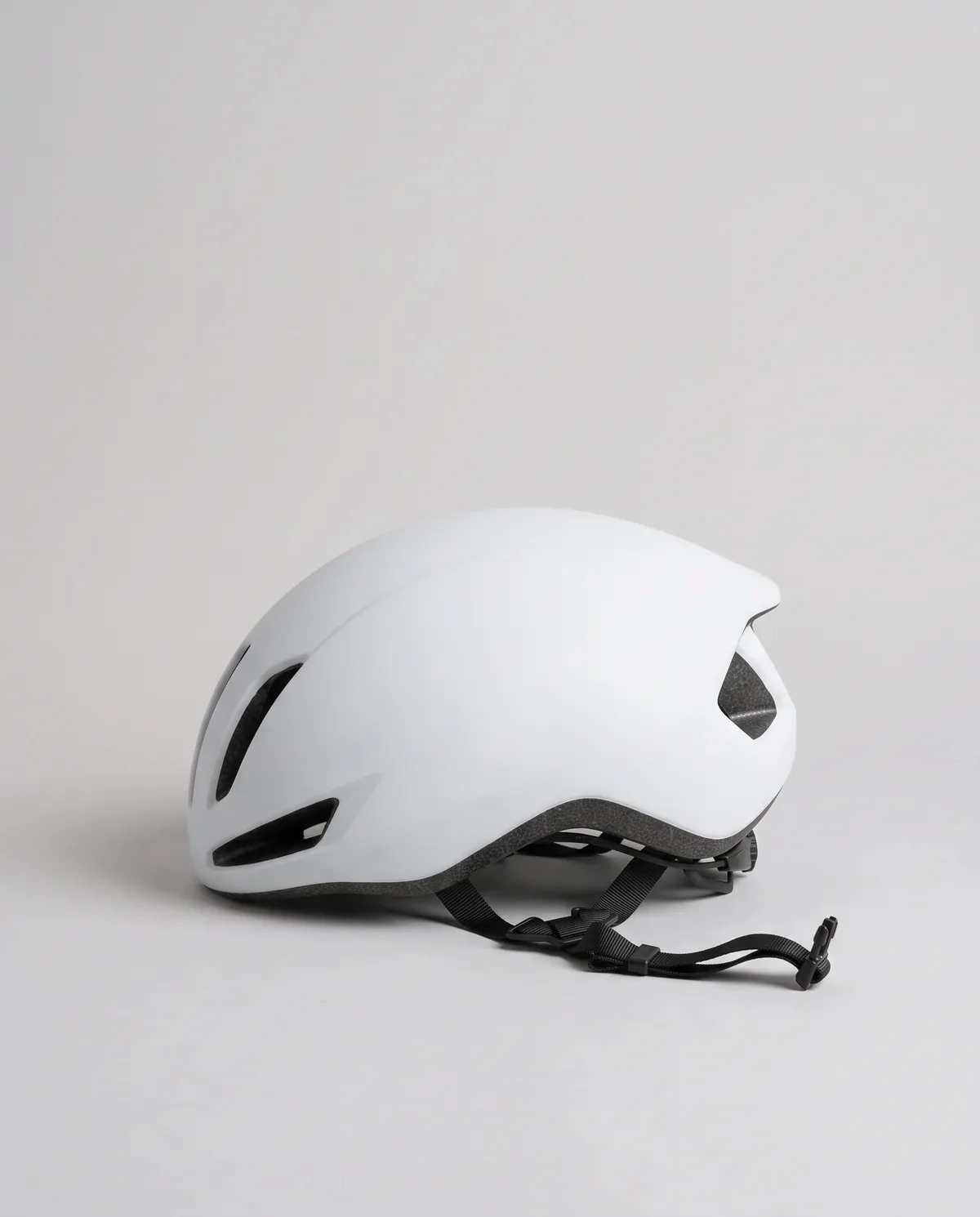
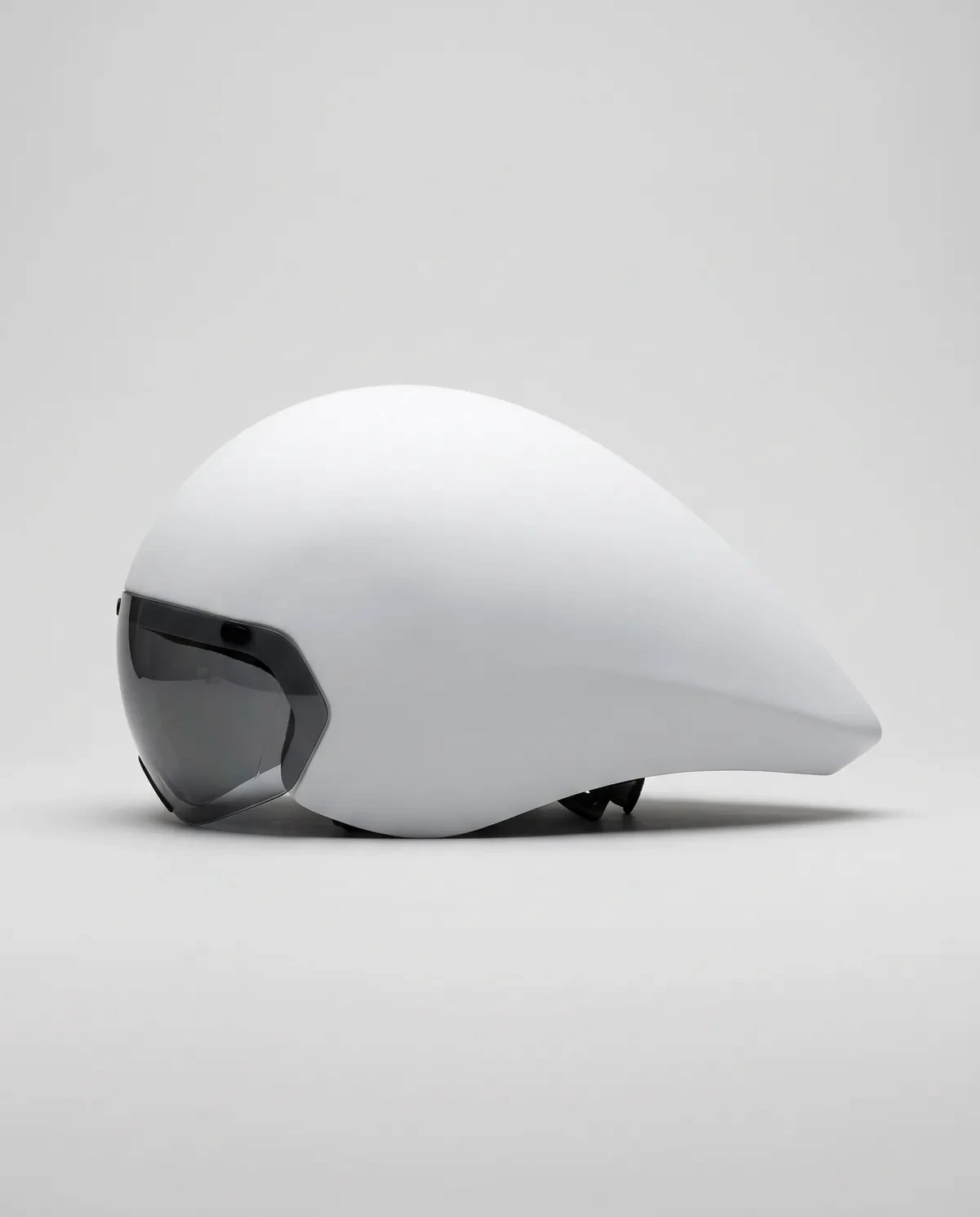
An aero helmet has fewer vents and a smoother shape. In the wind tunnel at 40 km/h (25 mph), the fastest ones save 6–8 W over a budget helmet. It helps on the flats and descents, as long as you keep your head low and still. On climbs it matters much less, and it’s less comfortable in the heat.
6–8 W
What the fastest aero helmets saved at 40 km/h (25 mph) over a budget helmet, in a wind tunnel test of 47 helmets.
−0'30"
What it’s worth on the example gravel ride, 62 km (39 mi) with 780 m (2,560 ft) of climbing, for about €200. On the example road ride it’s −0'45".
€110
What it costs you extra if you needed a new helmet anyway. We count a regular helmet at €90.
3.7 W
The gap between the fastest and slowest road helmet at 30 km/h (19 mph). At 40 km/h (25 mph) it was 8.85 W.
How much the head matters
On a road bike, most of your effort goes into pushing air. A 2017 review of cycling aerodynamics cites one study where air made up over 90% of the resistance on the flat, and another where it took 56 to 96% of the power, depending on the grade. About 80% of that air resistance comes from the rider and the rest from the bike1.
The head sits right out in the airflow, so the helmet makes a noticeable difference to the drag of the whole rider. Some studies find a bigger gap between a good and a bad helmet than between fast and slow wheels1.
An aero helmet has fewer vents and a shape designed to move air cleanly over your head. That’s also why it can run a bit warmer2.
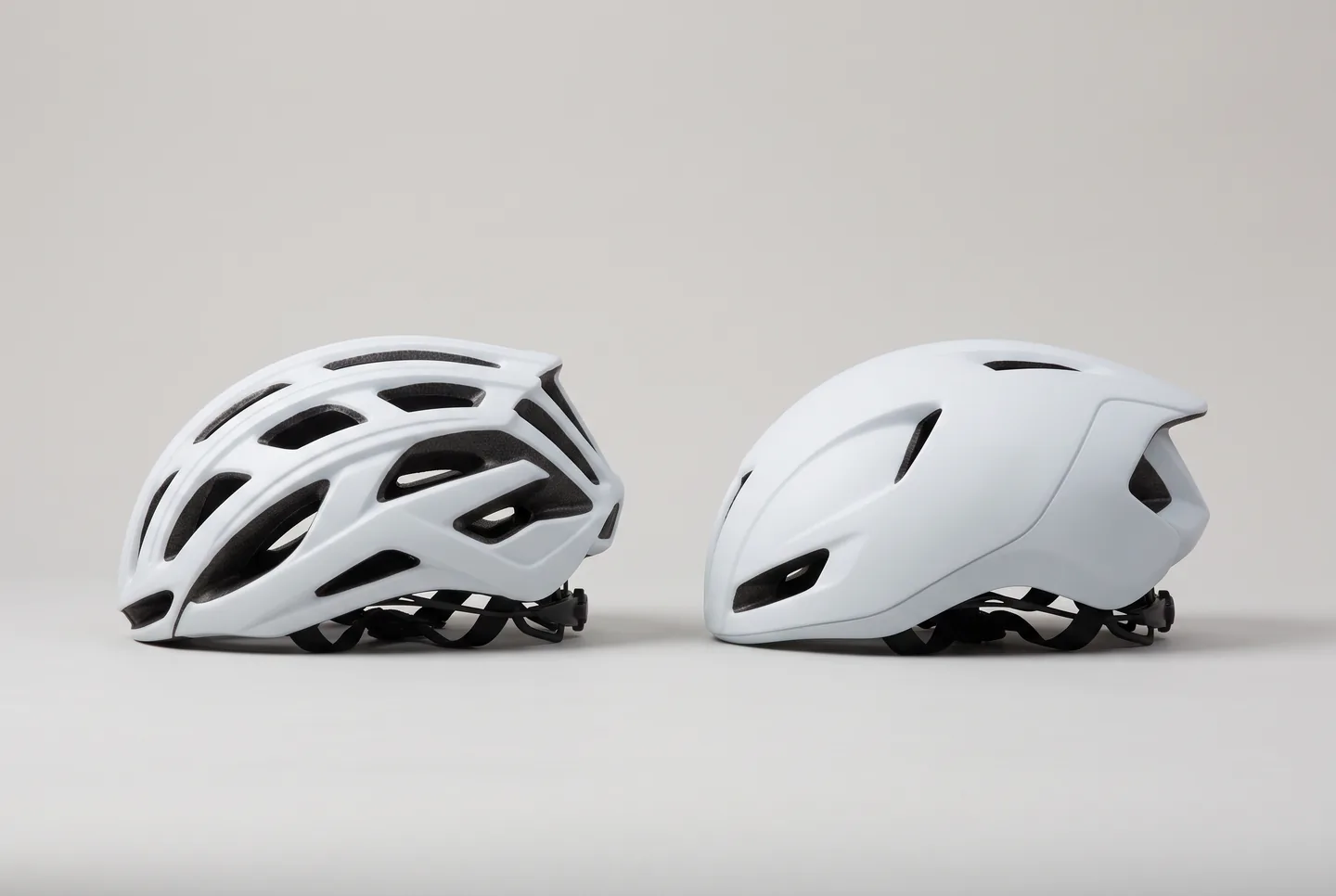
To put numbers on it, in the Cyclingnews test at 40 km/h (25 mph), the mannequin on the bike with a budget helmet needed about 248 W just to overcome the air. The fastest road helmet cut 8 W of that, about 3%2,3.
What the tests say
Cyclingnews took 47 helmets, 41 road and 6 time trial, to the Silverstone wind tunnel in England. Every helmet went on the same mannequin, with the same suit and bike, in a fairly aggressive breakaway position, at 40 km/h (25 mph) and at several wind angles. The ten fastest were retested at 50 km/h (31 mph). The baseline was a budget all-round helmet2. The full test is subscriber-only, so we use the numbers the magazine publishes for free in its guides2,3.
The fastest aero helmets saved 6 to 8 W over the baseline helmet, while two high-end vented helmets saved 1.1 and 2.4 W. The fastest and slowest road helmets were 8.85 W apart, and across the whole test the gap from best to worst was more than 12 W2,3.
Within the same brand, the aero model saved 2.8 to 5.9 W more than the regular one:
WATTS SAVED AT 40 KM/H (25 MPH) COMPARED WITH A BUDGET HELMET
Regular helmetAero helmet from the same brand
High-end vented
High-end all-round
Budget
Other tests. 220 Triathlon tested nine aero road helmets in a bike maker’s wind tunnel, in a triathlon position on the aero bars, at 35, 45 and 55 km/h (22, 28 and 34 mph). The best and worst were 5.9% apart. The magazine says going from a regular road helmet to an aero one saves about a minute over 40 km (25 mi), but it doesn’t say at what speed4.
The manufacturers. Their numbers vary a lot depending on what they compare against. One claims 25 seconds over 40 km (25 mi) at 40 km/h (25 mph). Another claims 40 seconds over 40 km (25 mi) against its own vented helmet, measured on a time trial bike, and 46 seconds against a regular helmet in its marketing5.
When it matters: speed and head position
Speed. The faster you go, the more the air matters1. The same two helmets were 8.85 W apart at 40 km/h (25 mph) and 3.7 W apart at 30 km/h (19 mph). Slower riders, though, spend longer covering the same distance. They save fewer watts, but Cyclingnews says they gain more time. A headwind works like extra speed, too. At 30 km/h (19 mph) into a 20 km/h (12 mph) headwind, you’re hitting the same air as at 50 km/h (31 mph)2.
Climbs and descents. You’re slow on a climb, and the steeper the road, the less of your power goes into the air, so an aero helmet is worth less1. On descents and flats you’re faster, and it starts to matter again.
Head position. In the Cyclingnews test the mannequin had its head down in a race position. One helmet that was the third fastest of 24 without a visor in an earlier test, in a higher position, finished ninth of 41 road helmets here, again without a visor2. The magazine says you need your head down to get the full gain from an aero helmet with a tail, and that fit matters too3.
Tilt matters as well. In a study of time trial helmets, drag was high for all of them when the helmet was tilted a lot1. An aero road helmet is more forgiving than a time trial helmet when you move your head, but the gain still depends on how well you can hold your head in one position2,4.
Ventilation and heat
Researchers at RMIT University in Melbourne measured the drag and cooling of five helmets in a wind tunnel, using a heated mannequin head. The two time trial helmets, the most closed of the lot, cooled the worst, and one of them was also the most aerodynamic. With every helmet, the head cooled a lot more at 40 km/h (25 mph) than at 30 (19 mph), and above 40 it changed little6.
Where the vents are matters more than how many there are. When some of the front and side vents on a vented helmet were taped over, its drag coefficient dropped by more than 12%, and above 40 km/h (25 mph) it cooled just as well6. The 2017 review also concludes that well-placed vents cool your head without adding much drag1.
In real heat, your head warms up more. At the University of Texas, ten athletes rode indoors at 39 °C (102 °F), once in an aero helmet with no vents and once in a vented race helmet. Their heads ran warmer in the aero helmet, but core temperature, heart rate, power and time over a 12 km (7.5 mi) time trial were the same. It was a short test7.
The Cyclingnews testers say today’s aero helmets breathe better than they used to, but still run a bit warmer than the best vented ones, especially when you slow down. If you often ride in serious heat or on long, slow climbs, they recommend a better-vented helmet2,3. road.cc also says aero road helmets are generally a bit warmer5.
What it’s worth on your ride
In the calculator, an aero helmet lowers your CdA (the air resistance of you and the bike) by 0.0072 m², with a range of 0.0045 to 0.0108. At 40 km/h (25 mph) that’s about 6 W, between 3.7 and 8.9 W. The central value is the gap between an aero helmet and the high-end vented helmet from the same brand in the Cyclingnews test, 5.9 W3. The low value is the smallest gap between an aero helmet and a high-end vented one in the same guide, 3.7 W, and the largest was 6.4 W3. The high value is the gap between the fastest and slowest road helmets in the test, 8.85 W2. One manufacturer claims even more, 46 seconds over 40 km (25 mi) against a regular helmet5.
We don’t count weight. Aero helmets weigh a bit more on average, but only slightly and not always2.
If you ride in a group, you push less air and the helmet is worth less. In the calculator you enter how much of the ride you spend drafting and in what kind of group. For that part we count about 30% less drag in a small group taking turns, 35% if you’re always sitting on a wheel and 90% in the middle of a big group. We use that to work out your power. The helmet’s seconds only count on the part you ride alone, because in a group you go at the group’s speed. In the wind tunnel, drag dropped by 30 to 41% behind another rider, and in the middle of a big group it’s 5–10% of what a solo rider faces8,9.
On the example gravel ride, 62 km (39 mi) with 780 m (2,560 ft) of climbing, it’s worth about 0'30", between 0'20" and 0'45". On the example road ride, 80 km (50 mi) with 900 m (2,950 ft) of climbing, it’s about 0'45", between 0'30" and 1'10". It’s worth more there because the ride is longer and you’re faster on pavement, so the air matters more. If you draft for half the gravel ride, it’s worth about half. If you draft the whole way, it’s worth nothing, because in a group you go at the group’s speed. On your ride it could be more or less, depending on your speed, how much of the ride is flat or downhill and how much you draft.
What it costs. The calculator counts €200. In online stores you can find a few aero helmets on sale from about €140, but most cost €180 to €250, and some go over €300. Price won’t tell you how fast a helmet is. In the test, one of the cheapest aero helmets matched far pricier ones and beat a helmet costing almost four times as much3. If you needed a new helmet anyway, only the difference counts. We take off €90, the price of a regular helmet, so the aero one costs you €110 more. On the example gravel ride, each second then costs €3.55 instead of €6.45. Plus, an aero helmet often costs no more than the same brand’s vented model2.
NUMBERS FROM THE CALCULATOR
On the example ride for each discipline, with a 74 kg rider. Each upgrade is counted on its own, without the others.
ROAD
−0'45"
- Cost
- €200
- Per second
- €4.44
- Rank
- 4th of 27
GRAVEL
−0'30"
- Cost
- €200
- Per second
- €6.67
- Rank
- 4th of 26
MTB
—
Not counted in this discipline
Updated from the calculator on NOVEMBER 18, 2026.
How to choose one
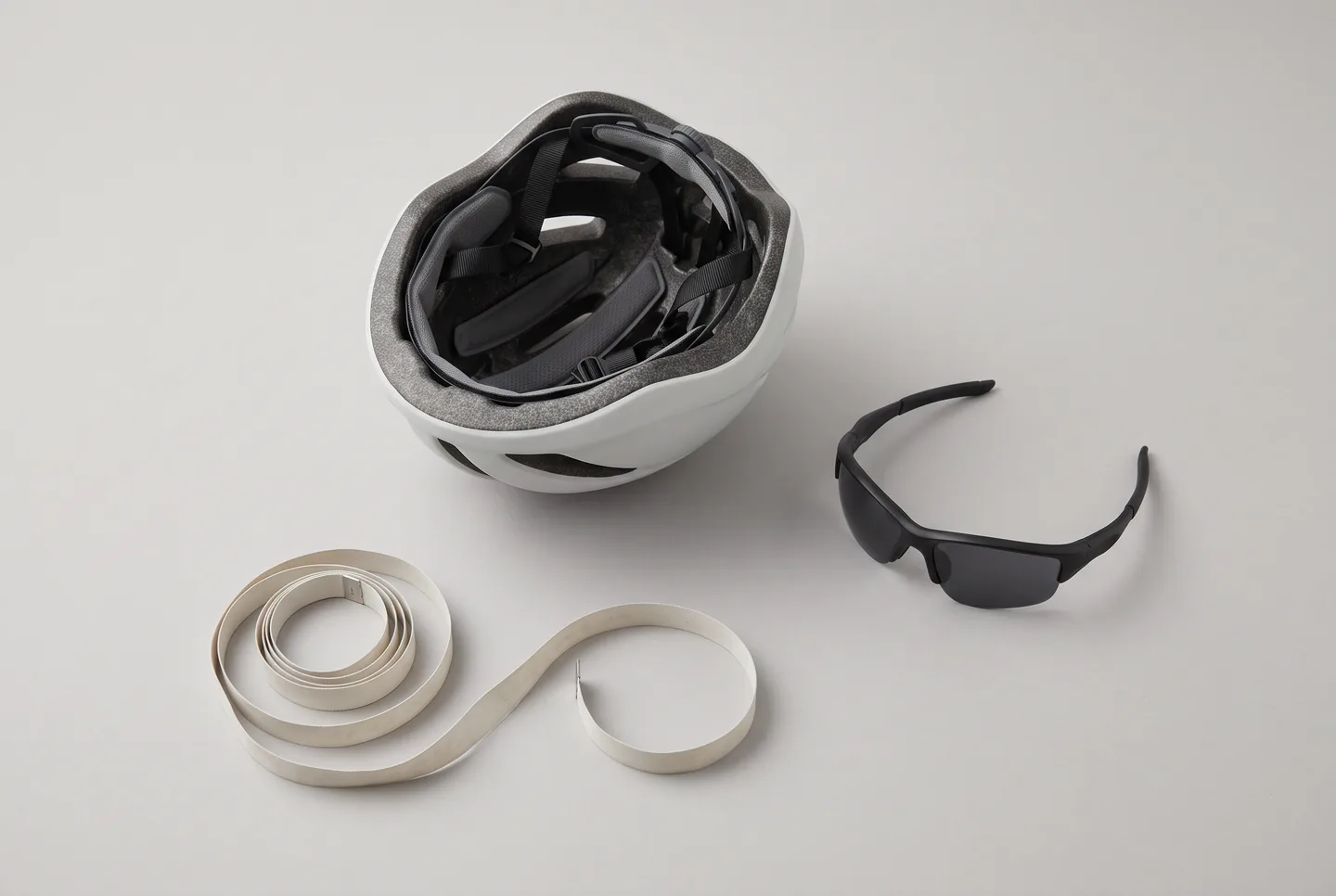
- Look at independent tests. Manufacturers measure their claimed seconds against their own helmets, in different positions, sometimes on a time trial bike5. A test with every helmet on the same mannequin lets you actually compare them2.
- Get the right size. Measure your head with a soft tape, just above the ears and across the forehead, and check it against the manufacturer’s size chart. Try it on if you can. It should feel snug but comfortable. If you’re between sizes, some riders size down for a summer aero helmet3.
- Wear it right. It should sit level and low on your forehead, one or two fingers above your eyebrows. The straps should make a V under your ears, with room for one or two fingers under the chin strap. When you open your mouth wide, the helmet should pull down10.
- Try it with your glasses. Some shapes can clash with the arms of certain glasses3. Glasses and visors also change the airflow over the helmet. In some tests drag went up a little, and in others it went down1.
- Think about where you ride. If it’s often very hot or you do a lot of long, slow climbs, you’re better off with a well-vented helmet or something in between3.
- Don’t skimp on safety. An aero helmet has to pass the same safety tests as a regular one5. The independent Virginia Tech Helmet Lab runs each helmet through 24 impacts and gives it a score, where lower is better11. Not every helmet has been tested3.
When it’s not worth it
If you mostly ride uphill or on slow terrain, the gain is small, because the air matters less there1.
If you’re almost always on a wheel, you push very little air. In a group you go at the group’s speed, so the helmet makes it easier but doesn’t get you there sooner.
If it’s often very hot, a better-vented helmet will be more comfortable3,7.
If you ride sitting upright and move your head a lot, you won’t necessarily get the gain measured with the head down2,4.
If your helmet is fairly new and undamaged, you’d be paying for a whole helmet to gain half a minute. Wait until it needs replacing. That means after any crash where it took a hit, and manufacturers give helmets a lifespan of three to five years12. At that point the price difference is small.
Sources
We read every source ourselves. They’re all public pages you can read for free. Prices are approximate, from online stores in November 2026. We don’t link to the stores, because the site doesn’t tell you where to buy.
- Crouch, Burton, LaBry and Blair, 2017. Review of cycling aerodynamics in Sports Engineering: share of air in the resistance, rider and bike, helmets, glasses and visors, vents. Article
- Cyclingnews, 2026. Guide to aero helmets with the watts saved at 40 km/h (25 mph) in the wind tunnel test of 47 helmets, speed, headwind, head position, heat, weight, price. The wind tunnel test is from 2025. The full test is subscriber-only and was paid for by a cycling clothing maker, which the magazine discloses as paid product placement. The magazine earns a commission on purchases made through its links. Guide · Test
- Cyclingnews, 2026. Guide to road helmets: watts saved and power needed to overcome the air at 40 km/h (25 mph) for aero and vented helmets, size, glasses, heat, safety. The magazine earns a commission on purchases made through its links. Guide
- 220 Triathlon, 2020. Nine aero road helmets in the wind tunnel, in a triathlon position, at 35, 45 and 55 km/h (22, 28 and 34 mph). Article
- road.cc. Manufacturers’ claimed seconds and test positions, plus heat, weight and safety of aero helmets. Article
- RMIT University, 2010. Alam and colleagues measure drag and cooling of five helmets in the wind tunnel, on a mannequin and on a heated head, from 30 to 70 km/h (19 to 43 mph). In Procedia Engineering, open access. Study
- University of Texas, 2013. Lee and colleagues tested ten athletes at 39 °C (102 °F) in an aero helmet with no vents and in a vented one. Head and core temperature, heart rate, power, time over 12 km (7.5 mi). Abstract on PubMed
- Politecnico di Milano, 2016. Belloli and colleagues measure the wake behind a rider in the wind tunnel, at 50 km/h (31 mph), at different distances and wind angles. Study (PDF)
- Blocken and colleagues, 2018. Air resistance inside a big group, with simulations and wind tunnel tests. Study
- NHTSA, 2012. The US road safety agency on choosing the right size and wearing a bike helmet. Guide
- Virginia Tech Helmet Lab. Safety ratings of bike helmets, from 24 impacts in the lab. Ratings
- Cycling UK. How to wear a helmet and when to replace it, after a crash and, according to manufacturers, after three to five years. Article